
Indications
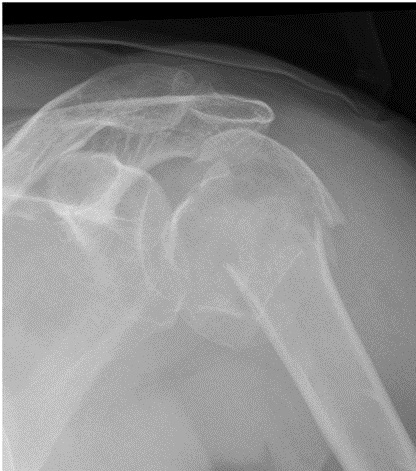
- Displaced two and three part fractures in good bone
- Displaced greater tuberosity fractures
- Fracture dislocations in younger patients
- ProFHER (JAMA 2015) found no benefit from surgery for most displaced fractures in older adults
- Reverse shoulder arthroplasty for complex fractures in older patients
- Displaced fractures in younger patients and fracture dislocations
Position
- Beach chair with access for fluoroscopy
- Beach chair with the arm free
Operative Steps
- Deltopectoral approach, retract the cephalic vein laterally
- Place traction sutures through the rotator cuff to control the tuberosities
- Reduce the head to the shaft, restore neck shaft angle and medial support
- Locking plate lateral to the bicipital groove, 5 to 8 mm below the top of the greater tuberosity
- Inferomedial calcar screws support the medial column
- Check screw tips on fluoroscopy in several rotations to exclude joint penetration
- Tie cuff sutures to the plate
- Use calcar screws for medial support
- Tuberosity sutures through the cuff improve stability
Postoperative Care
- Sling, early passive motion
- Active motion once the tuberosities are healing
- Physiotherapy from early passive motion
Complications
- Intra-articular screw penetration
- Varus collapse and screw cut out
- Avascular necrosis
- Axillary nerve injury and subacromial impingement
- Screw cut out into the joint
- Avascular necrosis of the head
Related Pages
Reviewed by Professor Phong Tran, Head of Orthopaedic Surgery, Western Health. Last updated 10 October 2026.