
Indications
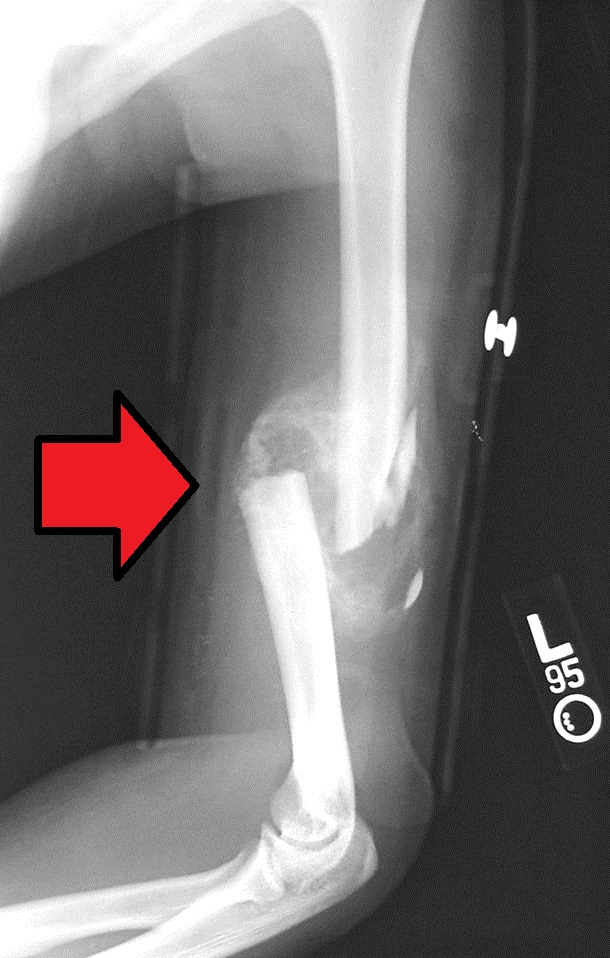
- Most heal in a functional brace (Sarmiento)
- Surgery for open fractures, vascular injury, floating elbow, polytrauma and pathological fractures
- Failed closed treatment and segmental fractures
- Radial nerve palsy at presentation is not an indication for exploration in closed fractures
Position
- Anterolateral approach, supine with arm board
- Posterior approach, prone or lateral
- Image intensifier and radiolucent arm board
Operative Steps
- Anterolateral approach for proximal and middle thirds, splitting brachialis
- Posterior approach for the distal third, identifying the radial nerve in the spiral groove
- The radial nerve crosses the posterior humerus about 20 cm above the medial epicondyle and 14 cm above the lateral epicondyle
- Compression plating, at least three bicortical screws each side
- Intramedullary nailing for pathological and segmental fractures, with more shoulder pain
- Minimally invasive anterior bridge plating avoids the radial nerve
- Protect the radial nerve with a vessel loop during plating
Postoperative Care
- Early elbow and shoulder motion
- Radiographs at 2, 6 and 12 weeks
- Return to heavy work after union
Complications
- Radial nerve palsy, most primary closed palsies recover
- Nonunion
- Shoulder pain after antegrade nailing
- Infection
- Nonunion, more common with transverse fractures
- Infection
- Shoulder pain and stiffness after antegrade nailing
Related Pages
Reviewed by Professor Phong Tran, Head of Orthopaedic Surgery, Western Health. Last updated 10 October 2026.