
Indications
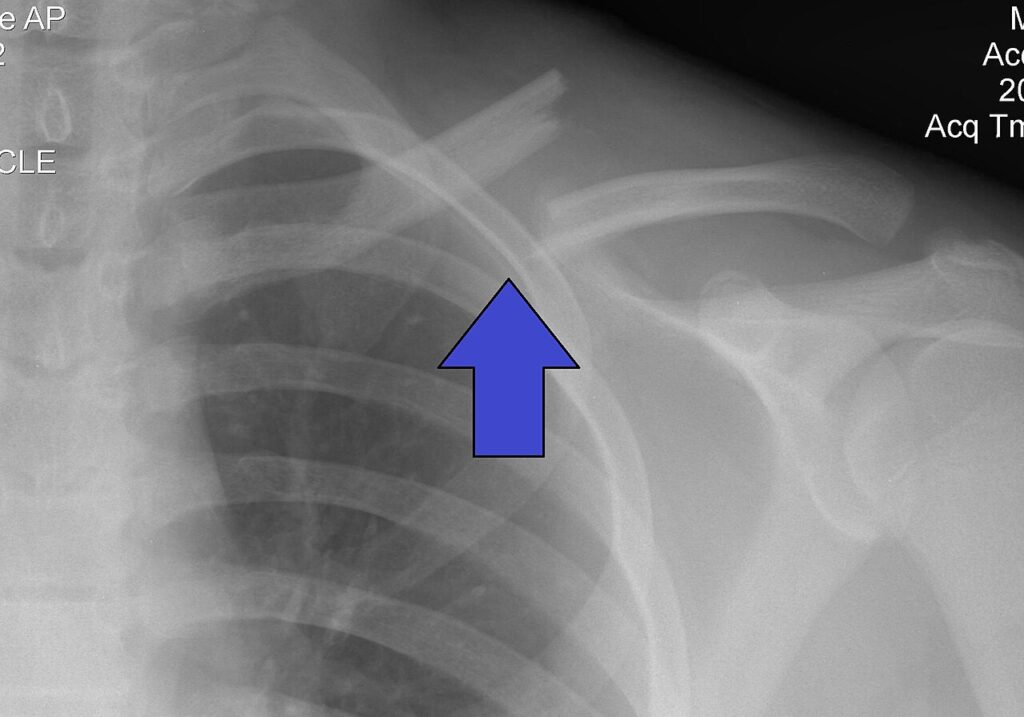
- Open fracture or threatened skin
- Shortening over 2 cm or complete displacement in active adults
- Floating shoulder, polytrauma, neurovascular injury
- Symptomatic nonunion
- Plate fixation of displaced midshaft fractures lowers nonunion and improves early function (COTS, JBJS 2007)
- Distal third fractures with coracoclavicular disruption
Position
- Beach chair with the head turned away
- Image intensifier with cephalic and caudal tilt views
Operative Steps
- Incision along the inferior border of the clavicle so the scar lies off the plate
- Identify and protect supraclavicular nerve branches
- Raise a full thickness myofascial layer
- Reduce and hold with clamps, lag screw for an oblique fracture
- Superior or anteroinferior precontoured plate
- Three bicortical screws each side
- Use drill guides and avoid plunging inferiorly or posteriorly toward the subclavian vessels
- Close the myofascial layer over the plate
- Intramedullary devices are an alternative for simple fractures
Postoperative Care
- Sling for comfort, early pendulum exercises
- Avoid heavy lifting until union
- Avoid heavy lifting until union at about 6 to 12 weeks
- Return to contact sport at about 3 months
Complications
- Prominent hardware needing removal
- Numbness below the incision
- Subclavian vessel or brachial plexus injury
- Nonunion and infection
- Hardware prominence and removal
- Infraclavicular numbness
- Nonunion and refracture after plate removal
Related Pages
Reviewed by Professor Phong Tran, Head of Orthopaedic Surgery, Western Health. Last updated 10 October 2026.