
Aetiology
- Repetitive pressure, trauma, gout, rheumatoid arthritis
- Septic bursitis from Staphylococcus aureus in most cases
- Occupational kneeling in carpet layers and plumbers (housemaid’s knee)
- Leaning on the elbows (student’s elbow)
- Diabetes, alcohol excess and immunosuppression predispose to septic bursitis
Clinical Features
- Fluctuant swelling over the olecranon or patella
- Septic bursitis shows erythema, warmth, tenderness and cellulitis
- Joint motion is preserved, unlike septic arthritis
- Superficial infrapatellar bursitis (clergyman’s knee) presents below the patella
Investigations
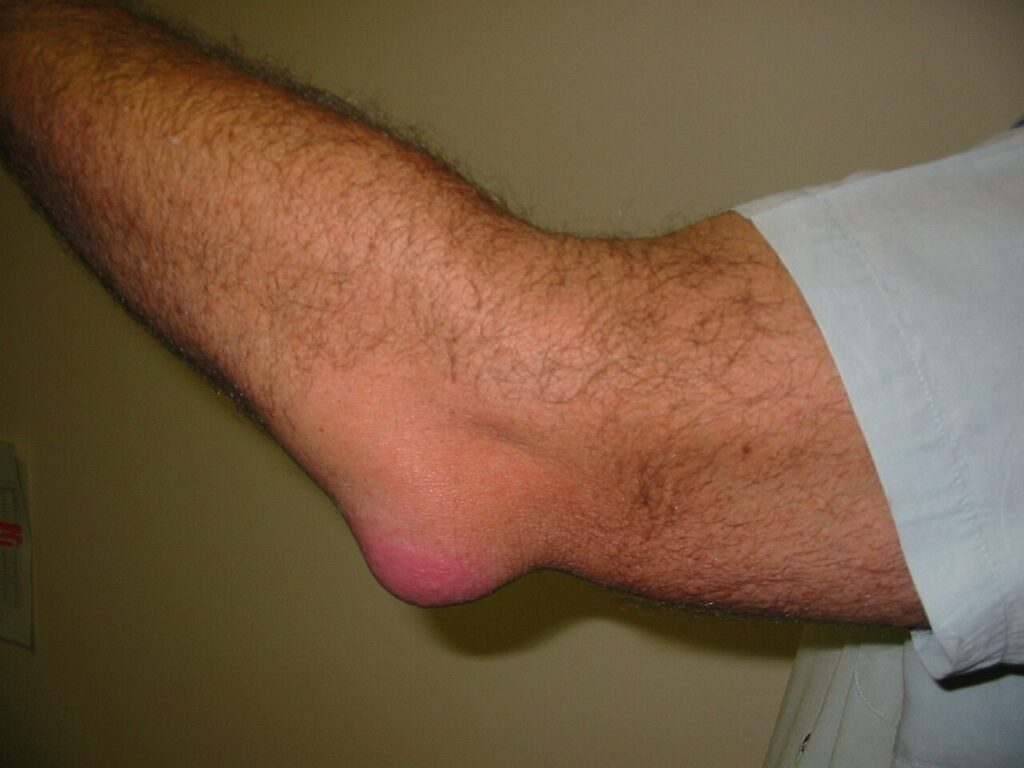
- Aspirate for Gram stain, culture and crystals
- Bursal fluid white cell counts are lower than in septic arthritis
- Radiographs exclude an olecranon spur or fracture
- Avoid aspirating through cellulitic skin near a joint
- Ultrasound defines a collection
Management
- Aseptic bursitis, compression, avoid pressure, aspiration
- Septic bursitis, antibiotics and repeated aspiration
- Surgical excision for failed treatment or chronic recurrent bursitis
- Excise through a longitudinal incision off the point of pressure
- Wound breakdown and recurrence are the main complications
Postoperative Care
- Compression and a splint for 1 to 2 weeks to limit fluid reaccumulation
- Sutures out at 10 to 14 days
- Avoid pressure on the area for about 6 weeks
- Oral flucloxacillin for mild sepsis, intravenous therapy for systemic illness or immunocompromise
- Treat gout flares with colchicine or NSAIDs
Reviewed by Professor Phong Tran, Head of Orthopaedic Surgery, Western Health. Last updated 10 October 2026.