
Indications
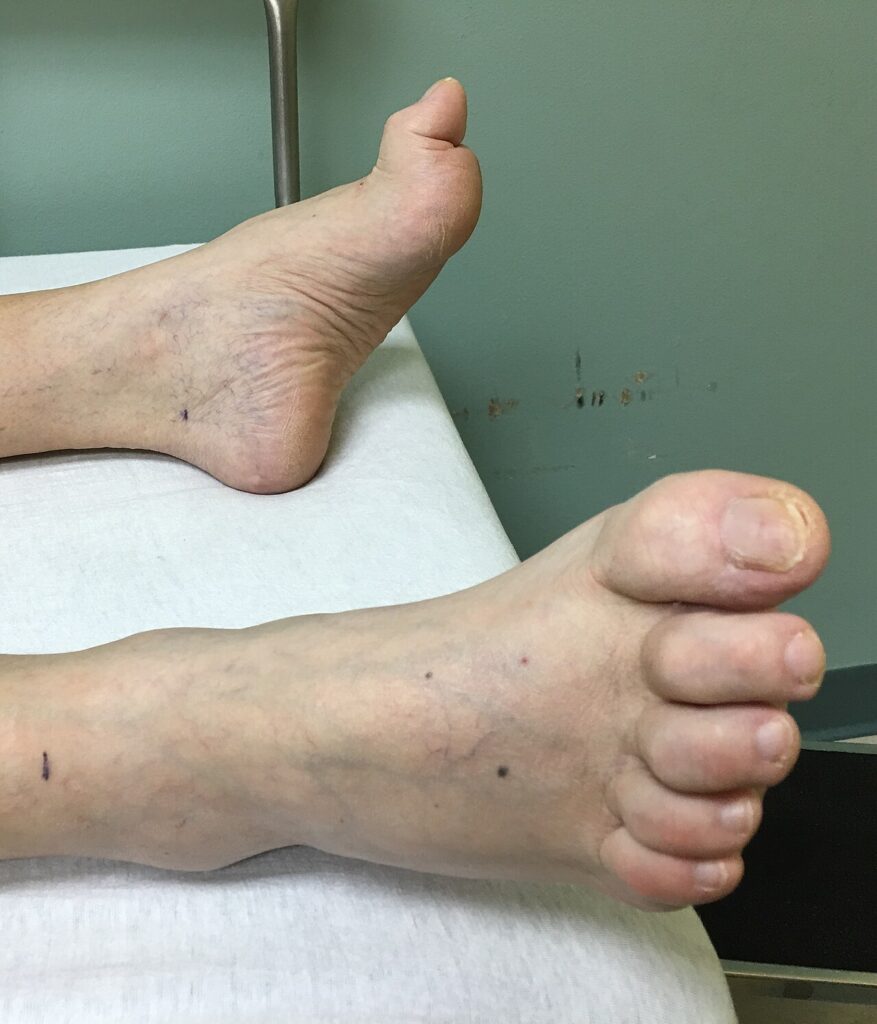
- Painful hammer, claw or mallet toes failing footwear changes
- Subluxed or dislocated lesser MTP joints
- Callosities over the PIP joint or the tip of the toe
- Second toe crossover deformity
Position
- Supine, ankle tourniquet
- Bump under the ipsilateral hip
- Image intensifier for wire placement
Operative Steps
- Flexible deformity, FDL to extensor transfer (Girdlestone Taylor)
- Fixed PIP deformity, resection arthroplasty or fusion held with a K wire
- MTP extension contracture, extensor lengthening and dorsal capsulotomy
- Subluxed MTP joint, Weil shortening osteotomy with plantar plate repair if needed
- Check toe perfusion after straightening
- Assess flexibility with the push up test before deciding on the procedure
- Mallet toe, DIP resection arthroplasty or fusion with FDL tenotomy
- Pass the K wire retrograde across the PIP joint and back into the proximal phalanx, crossing the MTP joint if it was subluxed
- Address hallux valgus at the same time if present
Postoperative Care
- Postoperative shoe, wires out at about 4 to 6 weeks
- Heel weight bearing in the postoperative shoe
- Taping or splinting for 6 weeks after wire removal
- Swelling can persist for several months
Complications
- Floating toe after Weil osteotomy
- Recurrence
- Vascular compromise of the toe
- Pin tract infection and wire breakage
- Stiffness and residual deformity
- Transfer metatarsalgia
Related Pages
Reviewed by Professor Phong Tran, Head of Orthopaedic Surgery, Western Health. Last updated 10 October 2026.