
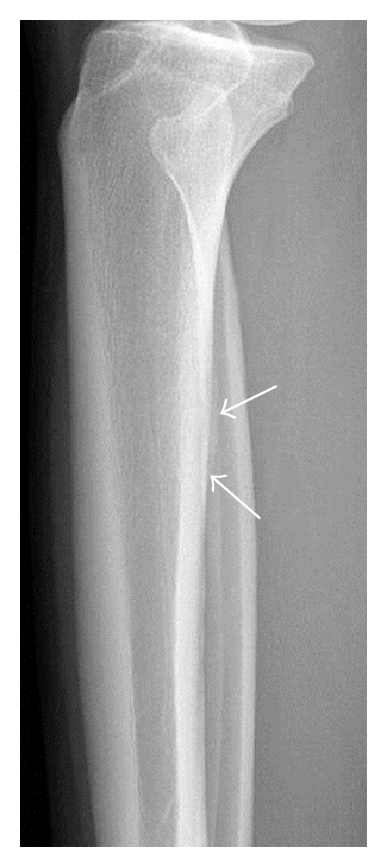
Epidemiology
- Teenagers, mostly athletic children
- Proximal tibia is a common site of stress fracture in children
- Associated with an increase in training load
Pathology
- Repetitive loading exceeds bone remodelling capacity
- Fracture often involves the posteromedial cortex of the proximal tibia
- Anterior cortical tension side stress fractures carry a higher risk of non union
Clinical Features
- Pain with activity, relieved by rest
- Night pain may develop as it progresses
- Localised tenderness over the proximal and middle tibia
- Possible swelling or palpable periosteal thickening
- Pain on hopping on the affected leg
- Ask about menstrual history in girls
Investigations
- Plain films may be normal early
- Later films show periosteal new bone and endosteal sclerosis
- Bone scan is sensitive
- MRI shows marrow oedema and fracture line without radiation
- CT defines the fracture line
Differential Diagnosis
- Shin splints, medial tibial stress syndrome
- Osteosarcoma and Ewing sarcoma
- Osteoid osteoma
- Osteomyelitis
- Chronic exertional compartment syndrome
Management
- Rest from the provoking activity
- Protected weight bearing if painful
- Cast may be needed for persistent pain or poor compliance
- Graduated return to sport once pain free and tenderness has resolved
- Address training errors and nutrition
- Consider vitamin D and relative energy deficiency in recurrent stress fractures
Prognosis
- Good with rest
- Investigate atypical lesions to exclude tumour
Reviewed by Professor Phong Tran, Head of Orthopaedic Surgery, Western Health. Last updated 10 October 2026.