
Definition
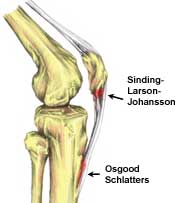
- Traction apophysitis at the inferior pole of the patella at the proximal patellar tendon origin
- Repetitive traction causes calcification and ossification within the proximal patellar tendon
- Counterpart of Osgood-Schlatter disease, which affects the tibial tubercle apophysis
Epidemiology
- Active children around 10 to 14 years
- Running and jumping sports, often during a growth spurt
- May coexist with Osgood-Schlatter disease
Clinical Features
- Activity related anterior knee pain localised to the inferior patellar pole
- Point tenderness at the inferior pole, sometimes with local swelling
- Pain with resisted knee extension, kneeling, jumping and stairs
- Associated proximal patellar tendinopathy in some patients
- Quadriceps and hamstring tightness common
Investigations
- Lateral radiograph shows fragmentation or calcification at the inferior pole
- Ultrasound or MRI shows tendon thickening and oedema if the diagnosis is unclear
- Radiographs may be normal early
Differential Diagnosis
- Patellar sleeve fracture, which must be excluded after an acute injury
- Sleeve fracture shows a high riding patella, haemarthrosis and loss of active extension
- Bipartite patella, usually superolateral
- Osgood-Schlatter disease
- Jumper’s knee in the skeletally mature
Management
- Self limiting, resolving with skeletal maturity
- Activity modification and load management
- Ice, simple analgesia and NSAIDs for flares
- Quadriceps and hamstring stretching, eccentric strengthening
- Patellar tendon strap may reduce symptoms
- Short period of immobilisation for severe pain
- Surgery almost never needed
Prognosis
- Good, symptoms settle once the apophysis fuses
- Residual ossicle occasionally symptomatic in adulthood
Reviewed by Professor Phong Tran, Head of Orthopaedic Surgery, Western Health. Last updated 10 October 2026.