
Aetiology
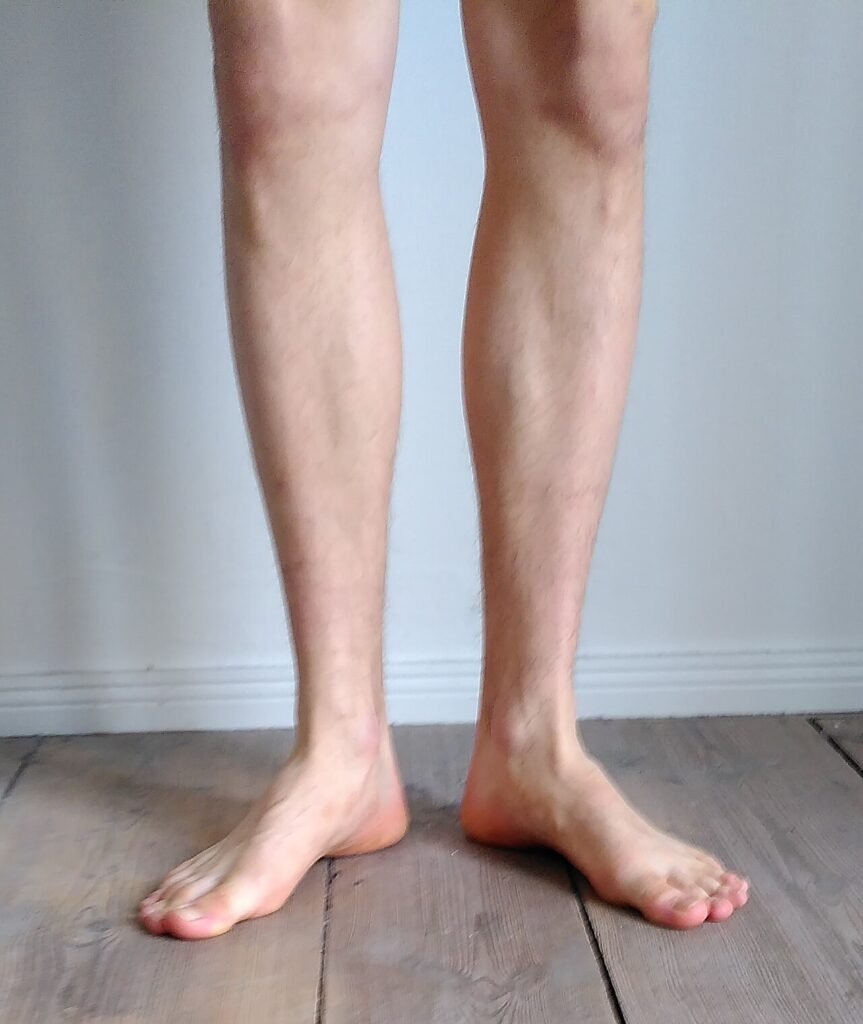
Intoeing by Age
- Infants, metatarsus adductus
- Toddlers, internal tibial torsion
- Children 3 to 8 years, increased femoral anteversion
Out-toeing
- External tibial torsion
- Femoral retroversion
- Infant hip external rotation contracture
- Calcaneovalgus foot and pes planus
Anatomy
- Femoral anteversion is about 40 degrees at birth and falls to about 15 degrees in adults
- Tibial torsion rotates externally with growth
Clinical Features
- Staheli rotational profile
- Foot progression angle during gait
- Hip rotation in prone, internal over 70 degrees suggests excess anteversion
- Thigh foot angle in prone with knee flexed for tibial torsion
- Heel bisector line for metatarsus adductus
- W sitting and patellae facing inwards with femoral anteversion
- Miserable malalignment, femoral anteversion with external tibial torsion
Investigations
- Clinical diagnosis in most children
- CT or MRI rotational studies only for surgical planning
- Hip radiographs for asymmetry or suspected dysplasia
Differential Diagnosis
- Cerebral palsy and other neuromuscular disorders
- Developmental dysplasia of the hip
- SCFE in out-toeing adolescents
- Clubfoot or skewfoot
Management
- Reassurance, most cases resolve spontaneously with growth
- Shoes, inserts, twister cables and night splints do not alter natural history
- Stretching or casting for rigid metatarsus adductus
- Derotation osteotomy for severe functional deformity persisting after about 8 to 10 years
- Supramalleolar tibial osteotomy for severe tibial torsion
- Proximal or distal femoral osteotomy for severe anteversion
Prognosis
- Internal tibial torsion resolves in most by mid childhood
- Femoral anteversion improves until about 8 years
- External tibial torsion may worsen and cause patellofemoral pain
Reviewed by Professor Phong Tran, Head of Orthopaedic Surgery, Western Health. Last updated 10 October 2026.