
Question
A 14 year old boy has 3 months of night pain and swelling above his left knee. A radiograph shows a mixed lytic and sclerotic lesion of the distal femoral metaphysis with a sunburst periosteal reaction.
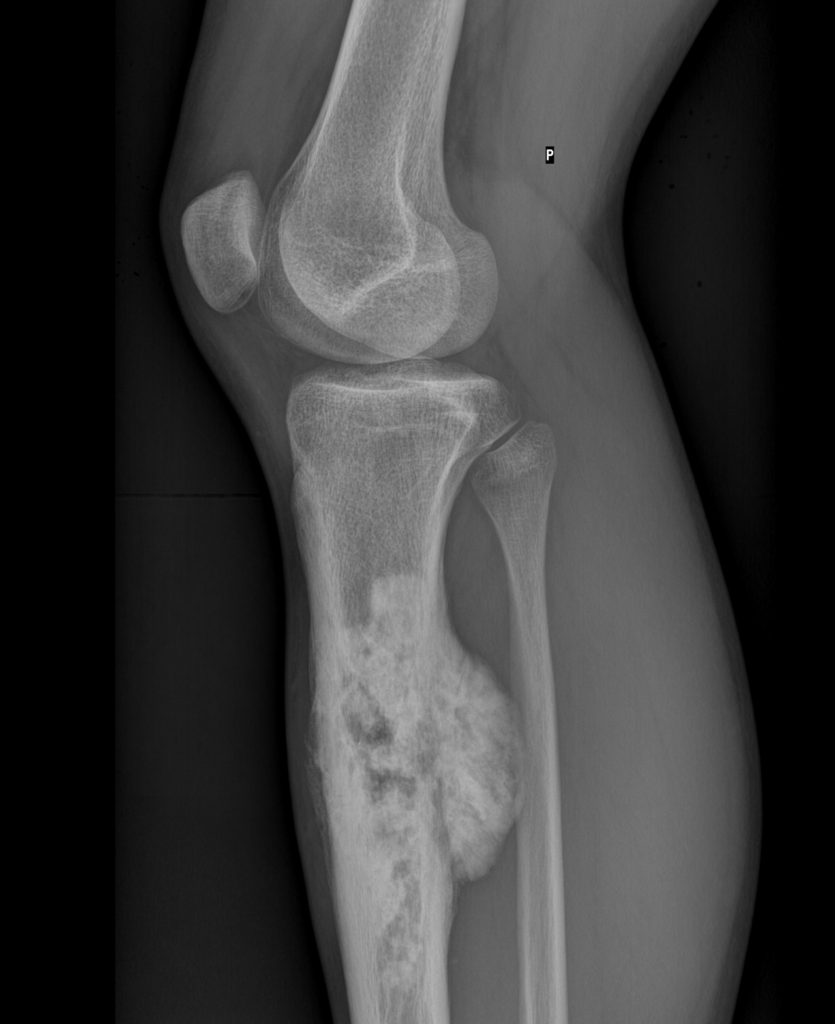
- What is the most likely diagnosis?
- How would you stage this lesion?
- Outline the principles of management.
Answer
Diagnosis
- Conventional high grade osteosarcoma, the most common primary malignant bone tumour in adolescents
- Distal femur and proximal tibia are the most common sites
- Codman triangle and sunburst periosteal reaction with osteoid matrix in the soft tissue mass
Staging
- MRI of the whole bone for extent, skip lesions and neurovascular involvement
- CT of the chest for lung metastases
- Bone scan or PET CT for bone metastases
- Biopsy at the treating sarcoma centre, along the line of the definitive incision
- Enneking staging (IIB for a high grade extracompartmental lesion) or AJCC staging
Management principles
- Multidisciplinary care at a sarcoma centre
- Neoadjuvant chemotherapy (MAP, methotrexate, doxorubicin and cisplatin), surgery, then adjuvant chemotherapy
- Wide resection with limb salvage and endoprosthetic or allograft reconstruction in most patients
- Amputation or rotationplasty when wide margins cannot be achieved
- Tumour necrosis over 90% after chemotherapy is a good prognostic sign
- Five year survival is about 65 to 70% for localised disease and about 20 to 30% with metastases
Related pages
Author Contributions
Orthofracs team
Reviewed by Professor Phong Tran, Head of Orthopaedic Surgery, Western Health. Last updated 10 October 2026.