
Classification
| Deficiency | Classification | Features |
|---|---|---|
| Fibular hemimelia | Achterman and Kalamchi | Most common long bone deficiency. Short tibia, anteromedial bowing, ball and socket ankle, tarsal coalition, absent lateral rays, ACL deficiency, genu valgum |
| Congenital femoral deficiency (PFFD) | Aitken, Paley | Short femur, coxa vara, hip instability, knee cruciate deficiency. Often associated with fibular hemimelia |
| Tibial hemimelia | Jones | Rare. Absent or deficient tibia with a prominent fibula |
Investigations
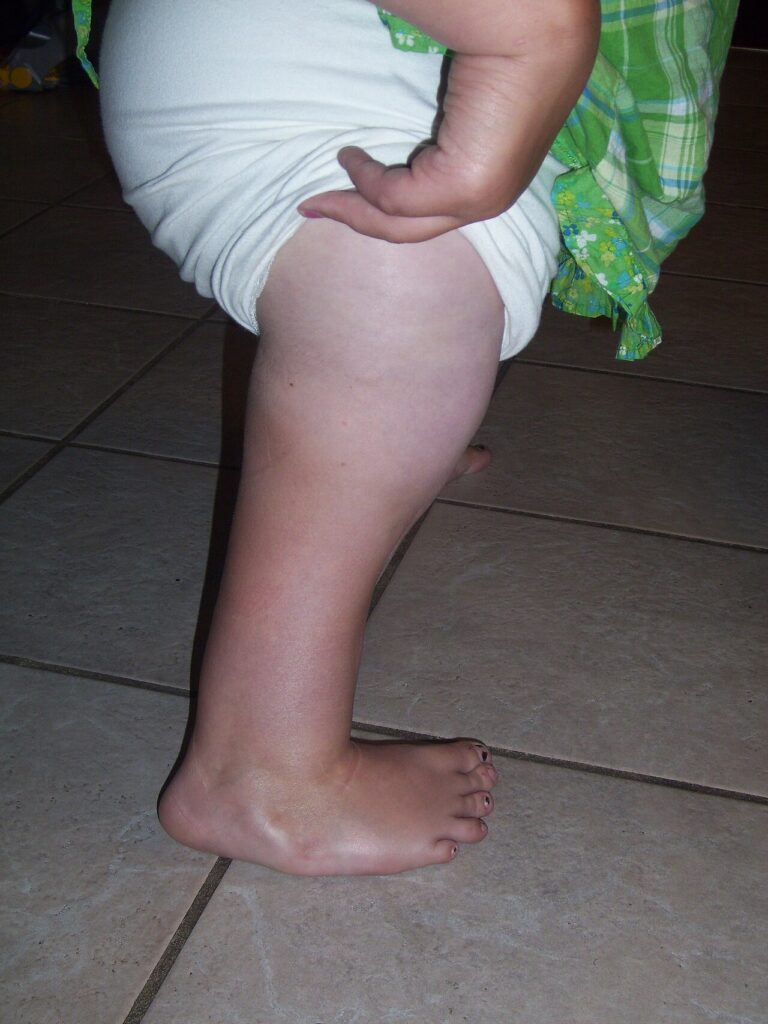
- X-ray of the whole limb and pelvis
- Predict final leg length difference with the multiplier method (Paley)
- Ultrasound or MRI to assess cartilaginous anlage in infants
- Assess the foot, knee stability and hip in the clinical examination
Management
- Shoe raise and prosthetic fitting for smaller differences
- Limb lengthening and reconstruction when the foot is functional and the difference manageable
- Syme or Boyd amputation for severe fibular hemimelia with a non-functional foot
- Knee disarticulation for tibial hemimelia with absent quadriceps or proximal tibia
- Van Nes rotationplasty is an option in severe femoral deficiency
- Timing of reconstruction is planned around growth and school
- Epiphysiodesis of the longer leg for small predicted differences
- Families need counselling about the number of operations involved in lengthening
- Psychological support for child and family
Related Pages
Reviewed by Professor Phong Tran, Head of Orthopaedic Surgery, Western Health. Last updated 10 October 2026.