
Indications
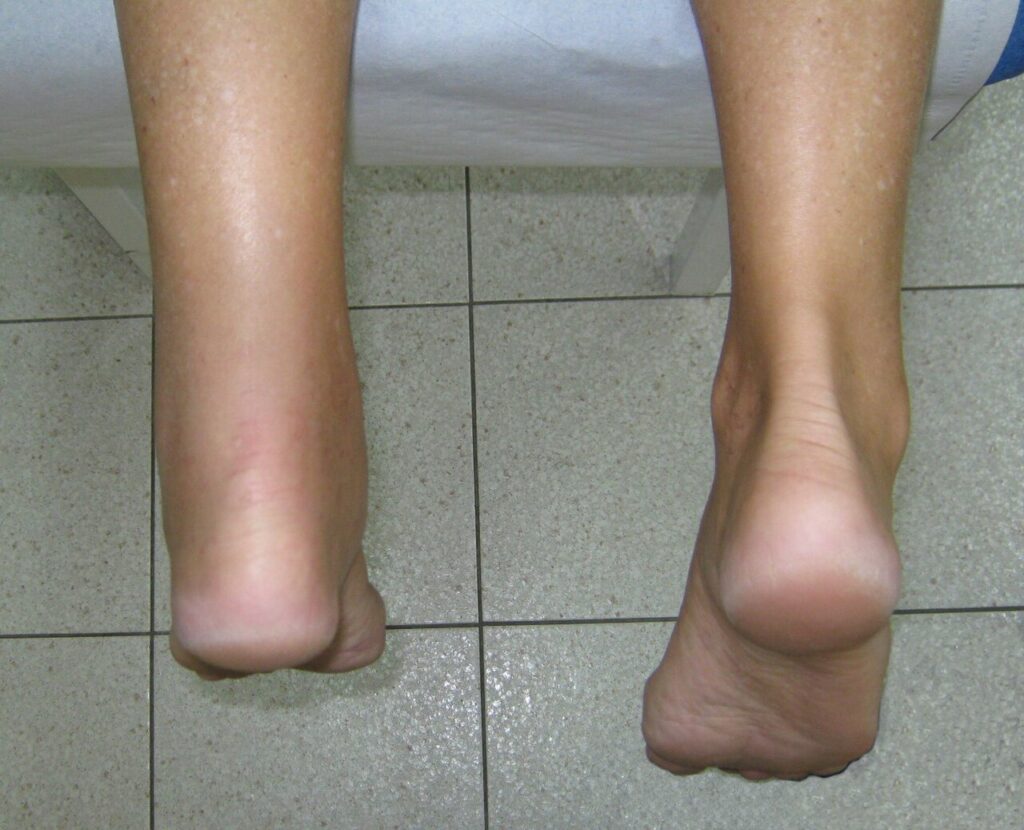
- Acute rupture in athletes or high demand patients
- Delayed presentation with a gap
- Functional rehabilitation without surgery gives similar outcomes for most (Willits, JBJS 2010. UKSTAR, Lancet 2020)
- Diagnosis is clinical with the Simmonds calf squeeze test and a palpable gap
- Ultrasound shows the gap in plantarflexion
Position
- Prone, both legs prepared to compare resting tension
- Thigh tourniquet
- Feet over the end of the table
Operative Steps
- Longitudinal posteromedial incision to avoid the sural nerve
- Open the paratenon as a separate layer
- Krackow or Bunnell core sutures in both ends
- Tension the repair to match the resting equinus of the other side
- Repair the paratenon
- Minimally invasive repair reduces wound problems but risks the sural nerve
- Augment chronic ruptures with V-Y advancement, turndown flap or FHL transfer
- Close the skin carefully with minimal handling
Postoperative Care
- Equinus boot with early protected weight bearing
- Functional rehabilitation over 8 to 12 weeks
- VTE prophylaxis while immobilised
- Remove heel wedges progressively
- Return to running at about 4 to 6 months and sport at 6 to 9 months
Complications
- Wound breakdown and infection
- Sural nerve injury
- Re-rupture and elongation
- VTE
- Re-rupture is about 2 to 5% after surgery
- Adhesions between tendon and skin
- Weakness of push off
Reviewed by Professor Phong Tran, Head of Orthopaedic Surgery, Western Health. Last updated 10 October 2026.