
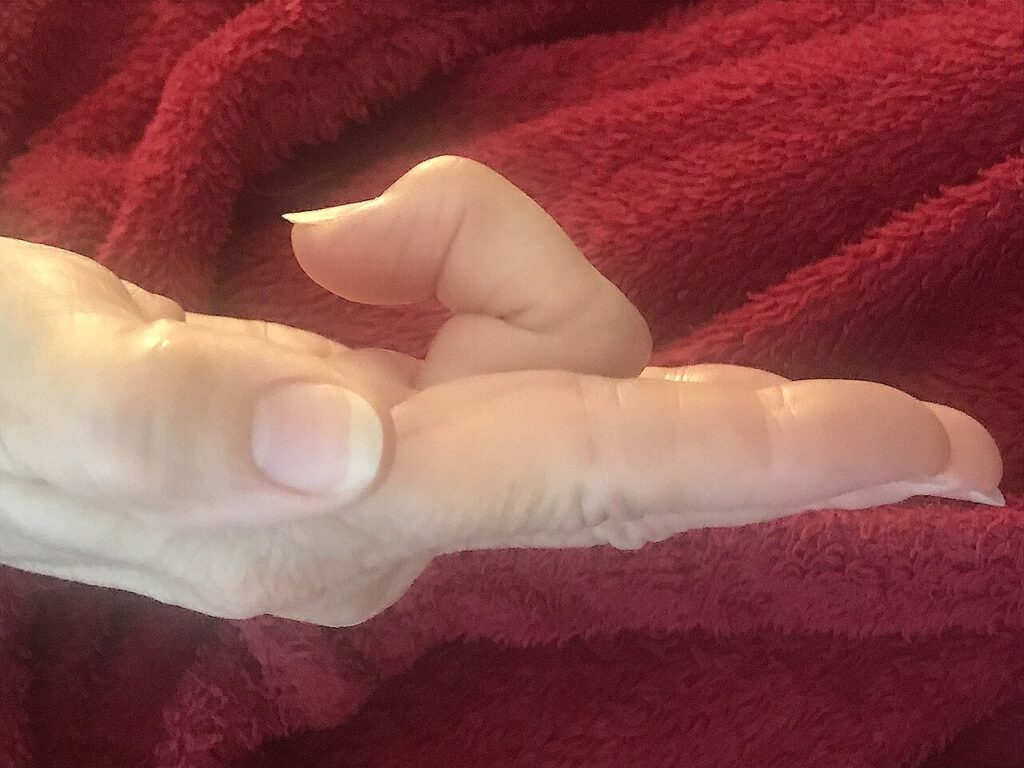
Indications
- Triggering or locking that fails steroid injection
- Locked finger
- Multiple digits or diabetes, where injection is less effective
- Percutaneous release is an option for the middle and ring fingers
- Steroid injection settles about two thirds of cases, less often in diabetes
Position
- Supine, local anaesthetic with or without tourniquet
- Wide awake local anaesthesia with no tourniquet (WALANT) allows active flexion to be checked
Operative Steps
- Transverse or oblique incision over the A1 pulley at the distal palmar crease, thumb at the MCP crease
- Blunt dissection protecting digital nerves
- Thumb radial digital nerve crosses obliquely and is most at risk
- Divide the A1 pulley completely, preserving A2
- Confirm free gliding with active flexion
- In rheumatoid arthritis, preserve the A1 pulley to avoid ulnar drift and perform flexor tenosynovectomy, excising a slip of FDS if needed
- Close with interrupted sutures
Postoperative Care
- Immediate motion
- Light dressing, with sutures removed at 10 to 14 days
- Hand therapy for stiffness or a persistent PIP joint flexion contracture
Complications
- Digital nerve injury
- Bowstringing if A2 is divided
- Incomplete release and recurrence
- Infection and painful scar
- Persistent PIP joint flexion contracture after long standing triggering
- Complex regional pain syndrome is uncommon
Related Pages
Reviewed by Professor Phong Tran, Head of Orthopaedic Surgery, Western Health. Last updated 10 October 2026.