
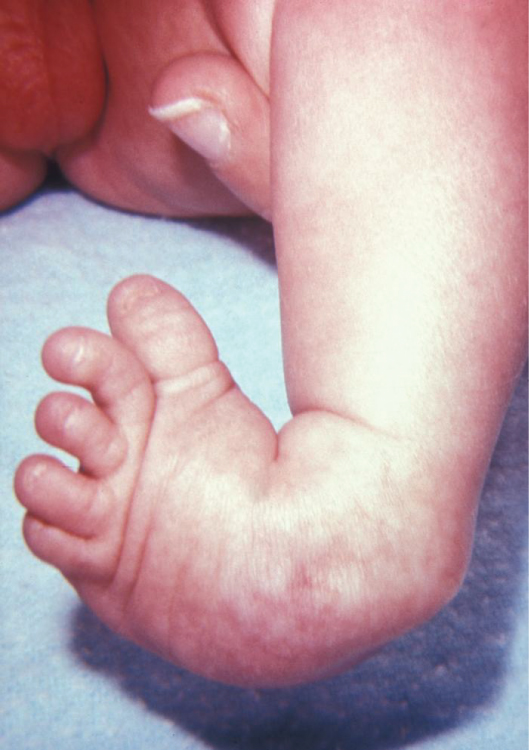
Definition
- Hindfoot equinus, varus of the forefoot & heel, adducted forefoot
Aetiology
- Idiopathic in most, multifactorial with family history
- Syndromic forms with arthrogryposis, myelomeningocele and chromosomal disorders are stiffer
Epidemiology
- About 1 per 1000 live births, higher in Polynesian populations
- Male to female about 2 to 1, bilateral in about half
Pathology
- Talar neck deviated medially and plantarly
- Navicular displaced medially on the talar head
- Calcaneus inverted and adducted under the talus
- Contracted tibialis posterior, tendo Achillis, FDL and FHL
Classification
| System | Description |
|---|---|
| Pirani score | Six clinical signs each scored 0, 0.5 or 1, total 0 to 6 |
| Dimeglio | Grades I to IV by reducibility, scored out of 20 |
Original publication Diméglio A, Bensahel H, Souchet P, Mazeau P, Bonnet F. Classification of clubfoot. J Pediatr Orthop B. 1995;4(2):129-36.
Clinical Features
- Short foot with deep medial and posterior creases
- Smaller calf on affected side
- Examine spine, hips and for syndromic features
Management
- Ponseti serial casting from the first weeks of life, weekly cast changes
- Correct cavus first by supinating the forefoot and elevating the first ray
- Abduct the foot with counterpressure on the talar head, never pronate
- Kite error is counterpressure at the calcaneocuboid joint, blocking heel correction
- Percutaneous tendo Achillis tenotomy for residual equinus in most feet
- Foot abduction brace full time for 3 months, then nights and naps to age 4
- Tibialis anterior transfer to lateral cuneiform for dynamic supination after age 3
Complications
- Relapse, mostly from brace non compliance
- Rocker bottom foot from forced dorsiflexion before hindfoot correction
- Pressure sores from casts or brace
Reviewed by Professor Phong Tran, Head of Orthopaedic Surgery, Western Health. Last updated 10 October 2026.