
Definition
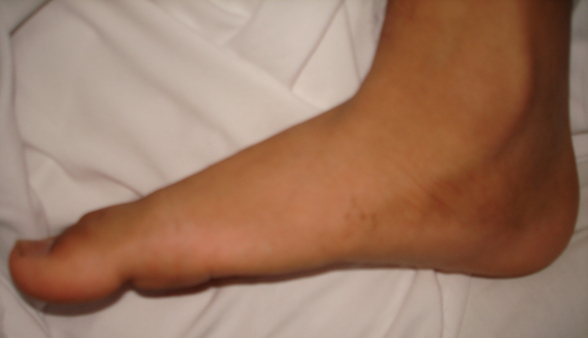
- Low or absent medial longitudinal arch with hindfoot valgus
- Flexible if the arch reconstitutes on tiptoe or great toe dorsiflexion
- Rigid if subtalar motion is restricted
Aetiology
- Flexible flatfoot is physiological, familial and linked to ligament laxity
- Flexible flatfoot with short tendo Achillis is more often painful
- Rigid causes are tarsal coalition and congenital vertical talus
- Other rigid causes are inflammatory arthritis, infection, trauma and neuromuscular disease
Epidemiology
- Most toddlers have flat feet, the arch forms through the first decade
- Tarsal coalition presents in early adolescence as the bar ossifies
Clinical Features
- Too many toes sign from behind
- Tiptoe test and Jack test show hindfoot inversion in flexible feet
- Silfverskiöld test for gastrocnemius contracture
- Peroneal spasm and recurrent sprains in coalition
- Pain at the sinus tarsi or under the talar head
Investigations
- Standing AP and lateral radiographs for painful or rigid feet
- Meary angle apex plantar
- Oblique view shows calcaneonavicular coalition, anteater sign on lateral
- Talar beak and C sign suggest talocalcaneal coalition
- CT defines coalition size and facet involvement
- Lateral forced plantarflexion view confirms congenital vertical talus
Management
- Painless flexible flatfoot needs no treatment
- Orthoses ease symptoms but do not change arch development
- Stretching for short tendo Achillis
- Painful flexible flatfoot failing non operative care, calcaneal lengthening osteotomy with gastrocnemius recession
- Calcaneonavicular coalition resection with EDB or fat interposition
- Talocalcaneal coalition resection for small bars without hindfoot arthrosis
- Congenital vertical talus treated by reverse Ponseti casting with limited talonavicular pinning (Dobbs)
- Triple arthrodesis as salvage
Reviewed by Professor Phong Tran, Head of Orthopaedic Surgery, Western Health. Last updated 10 October 2026.