
Anatomy
- Formed from L2 and L3
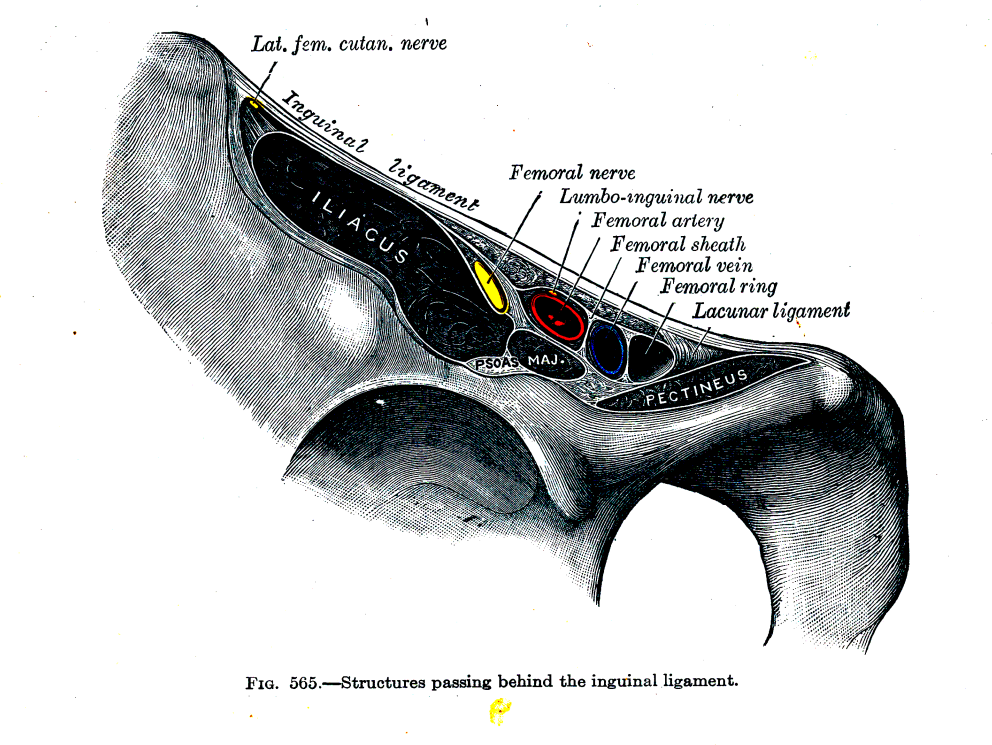
- Crosses iliacus and leaves the pelvis under or through the inguinal ligament close to the ASIS
- Course near the ASIS is variable
- Enters the thigh superficial to sartorius
- Can pass several centimetres medial to the ASIS
Sensory Supply
- Anterolateral thigh
- No motor supply
Clinical Features
- Meralgia paraesthetica gives burning pain and numbness of the anterolateral thigh
- No weakness or reflex change
- Causes include tight belts, obesity, pregnancy, diabetes and prone positioning
- Iatrogenic injury follows iliac crest graft harvest and anterior hip and pelvic approaches
- Prolonged standing and hip extension worsen symptoms
Investigations
- Diagnosis is clinical
- Diagnostic nerve block
- Nerve conduction studies are unreliable
- Pelvic imaging to exclude a mass in older patients
Differential Diagnosis
- L2 or L3 radiculopathy
- Femoral neuropathy, which causes weakness
Management
- Remove the cause of compression and encourage weight loss
- Local anaesthetic and steroid injection
- Neurolysis or neurectomy for refractory pain
- Most cases settle with conservative care
Structures at Risk
- Direct anterior approach to the hip, so enter through the tensor fascia lata sheath and stay lateral
- Iliac crest graft harvest, so start about 3 cm posterior to the ASIS
- First window of the ilioinguinal approach
- Prone positioning on bolsters in spinal surgery
Reviewed by Professor Phong Tran, Head of Orthopaedic Surgery, Western Health. Last updated 10 October 2026.