
Anatomy
- Spinal part of cranial nerve XI arises from the upper cervical cord
- Ascends through the foramen magnum and leaves the skull through the jugular foramen
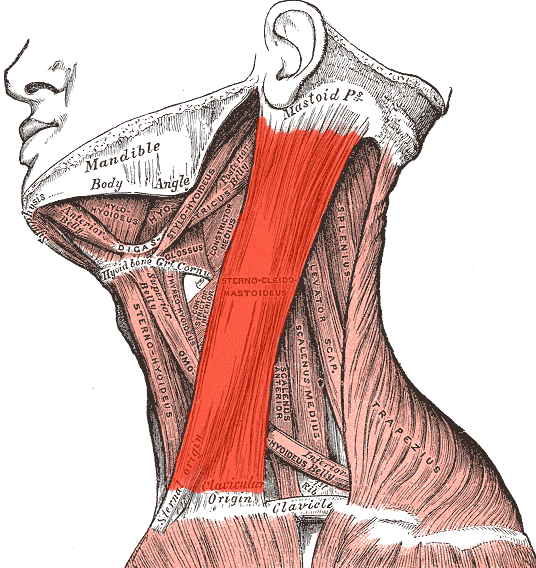
- Supplies sternocleidomastoid, then crosses the posterior triangle superficially to reach trapezius
- Its superficial course in the posterior triangle leaves it vulnerable
- Cervical plexus fibres can contribute to trapezius, so the deficit varies
Motor Supply
- Sternocleidomastoid
- Trapezius
Clinical Features
- Iatrogenic injury during posterior triangle lymph node biopsy is the commonest cause
- Neck dissection and penetrating trauma also injure it
- Shoulder droop, aching pain and weak shoulder shrug
- Lateral scapular winging with weak abduction above shoulder height
- Trapezius wasting with an asymmetric neckline
- Trapezius winging is more obvious on abduction, serratus winging on forward flexion
- Abduction above 90 degrees is difficult
Investigations
- EMG of trapezius
- Ultrasound can locate the nerve and a neuroma
Management
- Early exploration with repair or grafting for iatrogenic division, ideally within 6 months
- Eden-Lange procedure transfers levator scapulae and the rhomboids laterally for chronic palsy
- Scapulothoracic fusion as a salvage option
- Physiotherapy for partial injuries with preserved trapezius function
Structures at Risk
- Posterior triangle lymph node biopsy near Erb’s point at the midpoint of the posterior border of sternocleidomastoid
- Modified radical neck dissection
Reviewed by Professor Phong Tran, Head of Orthopaedic Surgery, Western Health. Last updated 10 October 2026.