
Epidemiology
- Benign soft tissue tumours far outnumber sarcomas
- Sarcomas make up around 1% of adult cancers
- Unplanned excision of unrecognised sarcoma is a common problem
Clinical Features
- History of growth, pain, trauma, previous excision and radiotherapy
- Family history of neurofibromatosis or Li-Fraumeni syndrome
- Examine size, depth to fascia, mobility, transillumination, Tinel sign and regional nodes
- Red flags are size over 5 cm, deep to fascia and increasing size
- Pain and recurrence after excision also warrant sarcoma referral
- Many sarcomas are painless
Investigations
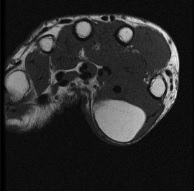
- Ultrasound first for small superficial lumps
- Contrast MRI for deep or indeterminate masses
- Radiographs show calcification and bone involvement
- Image guided core biopsy along the future resection line
- CT chest staging for confirmed sarcoma
- Whole body MRI for myxoid liposarcoma
- Nodal assessment for synovial, clear cell and epithelioid sarcoma
- Nodal assessment also for angiosarcoma and rhabdomyosarcoma
Differential Diagnosis
- Benign, lipoma, schwannoma, neurofibroma, haemangioma and ganglion
- Benign, nodular fasciitis and tenosynovial giant cell tumour
- Desmoid fibromatosis is locally aggressive and intermediate
- Undifferentiated pleomorphic sarcoma
- Liposarcoma, including atypical lipomatous tumour, myxoid, pleomorphic and dedifferentiated subtypes
- Myxofibrosarcoma infiltrates extensively along fascial planes
- Synovial sarcoma in young adults around the knee and foot
- Leiomyosarcoma and MPNST
- Rhabdomyosarcoma in children
Management
- Small superficial benign looking lesions excised or observed
- Discuss suspected sarcoma at MDT before biopsy or surgery
- Wide excision with a cuff of normal tissue
- Radiotherapy for most intermediate and high grade sarcomas
- Preoperative radiotherapy has fewer late effects but more wound complications
- Chemotherapy standard for rhabdomyosarcoma and extraskeletal Ewing sarcoma
- Re-excise scar and tumour bed after unplanned excision
- Active surveillance first for desmoid fibromatosis
- Marginal excision for limb atypical lipomatous tumour
Prognosis
- Adverse factors are high grade, large size, depth, positive margins and metastasis
- Lung is the commonest metastatic site
Reviewed by Professor Phong Tran, Head of Orthopaedic Surgery, Western Health. Last updated 10 October 2026.