
Definition
- Infection with Treponema pallidum, acquired sexually or transmitted vertically
Pathology
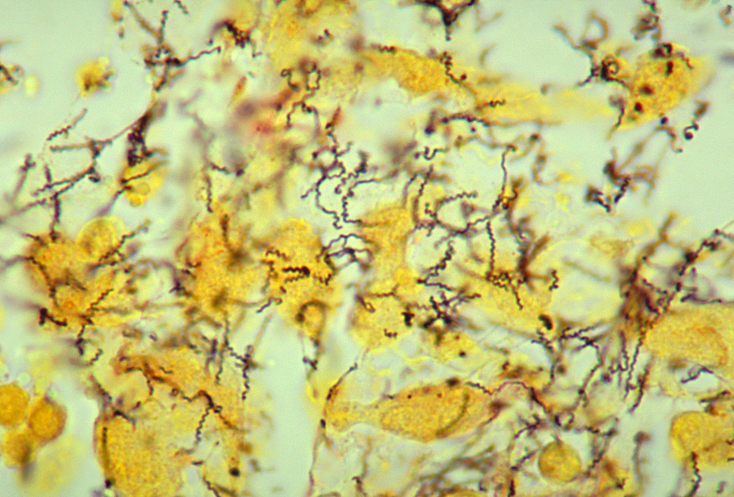
- Endarteritis obliterans with perivascular plasma cell infiltrate
- Gummata are granulomatous necrotic lesions of tertiary disease
Clinical Features
Congenital
- Parrot pseudoparalysis, a painful limb held still from osteochondritis or epiphyseal separation
- Wimberger sign, bilateral destruction of the proximal medial tibial metaphyses
- Symmetrical periostitis of long bones
- Sabre tibia, anterior bowing from dense endosteal and periosteal new bone
- Clutton joints, painless bilateral knee effusions in late childhood
- Hutchinson triad of notched incisors, interstitial keratitis and deafness
- Frontal bossing and saddle nose
Acquired
- Secondary syphilis may cause polyarthralgia and periostitis, often of the tibia
- Tertiary gummatous osteitis of the skull, tibia and clavicle
- Tabes dorsalis causes Charcot neuropathic arthropathy, most often of the knee
Investigations
- Non treponemal tests such as RPR to screen and monitor treatment
- Treponemal tests such as TPPA to confirm
- X-ray shows periostitis, sclerosis and lytic gummatous lesions
Differential Diagnosis
- Yaws
- Rickets and scurvy in infants
- Non accidental injury
- Paget disease for adult bowing
Management
- Benzathine penicillin G, regimen depending on stage
- IV penicillin for congenital and neurosyphilis
- Notify and trace contacts
- Bracing and protected weight bearing for Charcot joints
- Arthroplasty in Charcot knees carries high instability and failure rates
Reviewed by Professor Phong Tran, Head of Orthopaedic Surgery, Western Health. Last updated 10 October 2026.