
Definition
- Disseminated gonococcal infection causing septic or reactive joint and tendon inflammation
Aetiology
- Neisseria gonorrhoeae
- Risk higher in women, during menstruation, pregnancy and postpartum
- Terminal complement deficiency predisposes to recurrent infection
Epidemiology
- Most common cause of septic arthritis in young sexually active adults
Clinical Features
Arthritis dermatitis syndrome
- Migratory polyarthralgia
- Tenosynovitis, especially of the wrist and hand dorsum
- Painless pustular or vesiculopustular skin lesions on limbs
- Fever
Purulent arthritis
- Monoarthritis of the knee, wrist or ankle
- Look for urethral, cervical, rectal or pharyngeal symptoms
Investigations
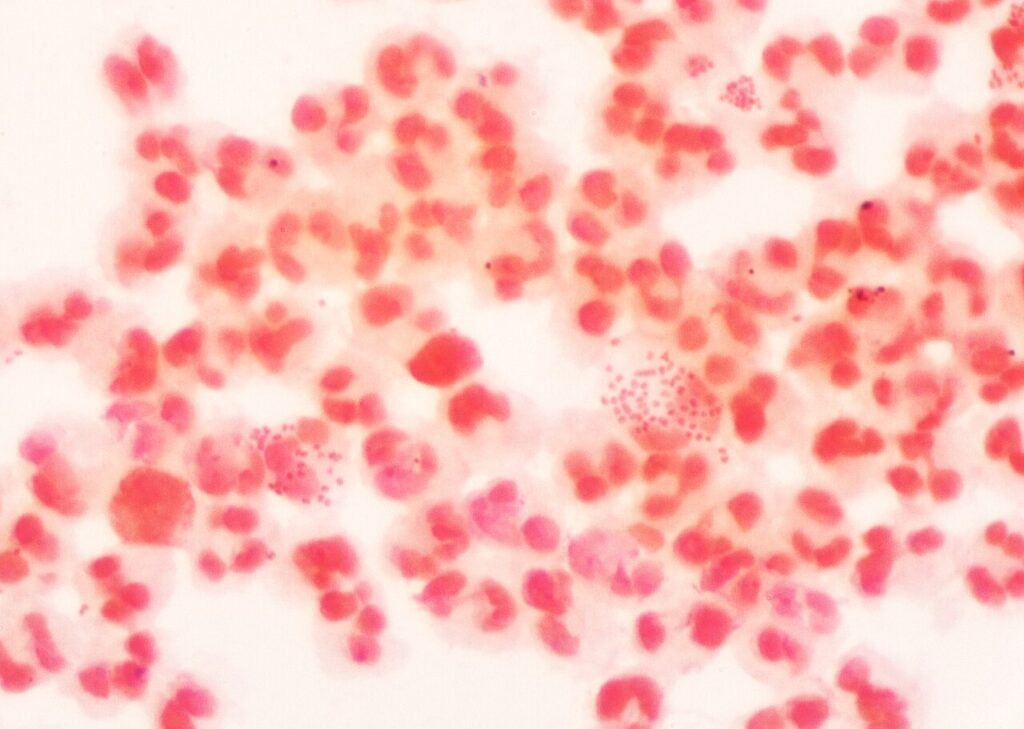
- Joint aspirate may show Gram negative intracellular diplococci, though stain and culture are often negative
- Culture on chocolate agar or Thayer Martin medium
- Blood cultures
- NAAT on urine, cervical, rectal and pharyngeal swabs raises diagnostic yield
- Screen for chlamydia, HIV and syphilis
Differential Diagnosis
- Reactive arthritis
- Staphylococcal septic arthritis
- Meningococcal arthritis
- Crystal arthropathy
Management
- IV ceftriaxone, then step down guided by susceptibility
- Rapid response to cephalosporin supports the diagnosis
- Concurrent treatment for chlamydia
- Repeated aspiration or arthroscopic washout for purulent effusions
- Contact tracing and notification
Reviewed by Professor Phong Tran, Head of Orthopaedic Surgery, Western Health. Last updated 10 October 2026.