
Definition
| Type | Extent |
|---|---|
| Superficial incisional | Skin and subcutaneous tissue |
| Deep incisional | Fascia and muscle |
| Organ or space | Joint, bone or implant |
- Within 30 days of surgery, or 90 days when an implant is left in place (CDC)
Aetiology
- Staphylococcus aureus is the most common organism, then coagulase negative staphylococci
- Risk factors are diabetes, obesity, smoking, rheumatoid arthritis, corticosteroids and nasal S. aureus carriage
- Long operating time and ASA grade 3 or above
Prevention
- Cefazolin 2 g within 60 minutes before incision, 3 g if 120 kg or more
- Redose cefazolin after 4 hours of surgery
- Stop prophylaxis within 24 hours
- Add vancomycin for known MRSA colonisation
- Chlorhexidine alcohol skin preparation
- Decolonise S. aureus carriers before arthroplasty
- Keep normothermia and glucose control
- See Surgical Prophylaxis Guidelines
Clinical Features
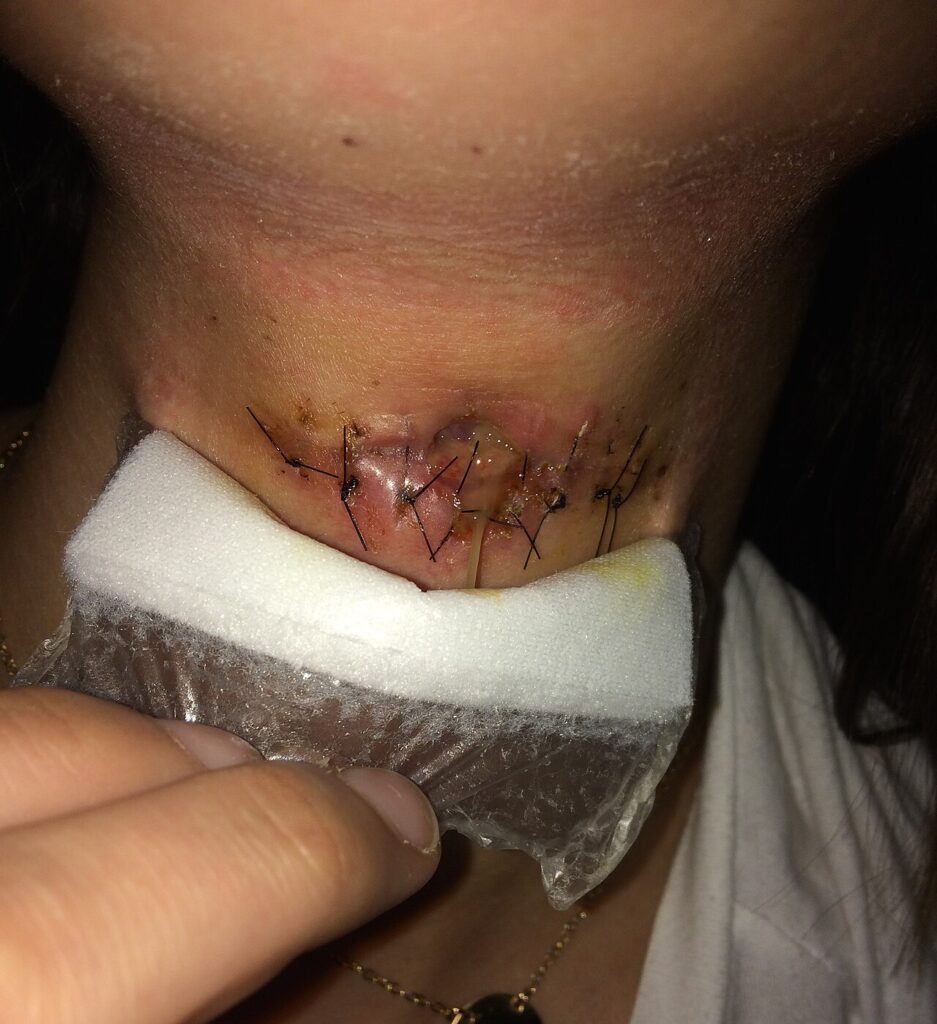
- Wound erythema, discharge, dehiscence and increasing pain
- Fever is often absent
Investigations
- Serial CRP. A second rise after the postoperative peak suggests infection
- Avoid superficial wound swabs
- At least five deep tissue samples taken with separate instruments
- Joint aspiration for suspected joint or implant infection
Management
- Superficial infection, antibiotics and wound care
- Deep infection, early return to theatre for debridement and washout
- Fracture implants can be retained if stable and the fracture is healing
- Remove loose implants and convert to external fixation if needed
- Targeted antibiotics with infectious diseases input
- For joint replacement see Periprosthetic Infections
Reviewed by Professor Phong Tran, Head of Orthopaedic Surgery, Western Health. Last updated 10 October 2026.