
Written by
Dr Emily Kong
MBBS | Accredited Orthopaedic Registrar
Weekly Presentation 26th March 2010
- Septic arthritis must be ruled out in the child with a painful joint
- Delay in treatment or failure to diagnose problematic
- Difficult patient group to obtain history and examination
- Prognosis significantly improved:
- Mortality reduced from 50% in 1874 to <1% in 1974
Incidence
- USA: 1 in 100,000 unchanged over a decade
- Israel: 37 in 100,000
- Malawi: 1 in 5000
- Africa: 1 in 20,000
Causative Organisms
- Most common: Staph aureus
- Group A Strep, Enterobacter
- H. influenza
- significantly decreased by vaccination
- Salmonella
- common in children with sickle-cell disease
- Kingella kingae
- unusual
- Beware emergence of MRSA
Risk Factors
- Young age
- Male gender
- Increased susceptibility to infection
- Umbilical artery catheterization
Clinical Symptoms and Signs
- Painful, swollen joint
- Effusion
- Restricted ROM
- Tenderness
- Increased warmth
- Systemically unwell, irritability, fever
- Cellulitis or abscess formation
- Limited spontaneous movement of affected joint
Investigations
Laboratory
- WCC
- Usually elevated in older children,
- sometimes elevated in younger children,
- rarely elevated in neonates
- ESR
- alone sensitivity 79%
- with elevated temp, elevated WCC and NWB – 98%
- CRP
- highest predictive value for septic arthritis
Imaging
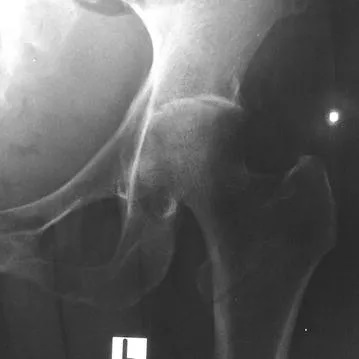
- Plain XR
- Differential Diagnosis
- osteomyelitis,
- fracture,
- neoplasia,
- increased joint space may indicate effusion
- Differential Diagnosis
- Ultrasound
- most sensitive tool for detection of hip effusion,
- false negative rate 5%,
- guided aspiration
- can evacuate pus,
- decrease damage to articular surfaces,
- DDx other arthritides
- direct ABx Rx,
- caution with –ve US with symptoms <24hrs or bilateral disease
- MRI
- sensitive and specific, can differentiate from osteomyelitis and non-infective causes of hip pain,
- signal intensity alterations and contrast enhancement of bone marrow and adjacent soft tissue
- Bone scan
- lacks sensitivity and specificity
Treatment
Management Algorithms
- Attempt to improve diagnosis and treatment
- Not applicable in all settings
- Should supplement, not substitute, clinical decision-making
Antibiotics
- Wide support for early administration and not withheld before diagnosisif clinical suspicion
- Choice based on most likely organism
- Initially administer i/v, then oral when clinical improvement evident
- Debate on duration of i/v: 2-7wks
- Growing evidence for short-course i/v therapy – 7 days
Joint Aspiration Vs Arthrotomy + Washout
- Arthrotomy best method of Rx
- Doubt with adequacy of decompression achieved with U/S guided aspiration
- Repeat aspirations may be required
- Only significant difference in open Vs arthroscopic hip washout was shortened inpatient stay
Take-home Message
- Indicators of poor prognosis:
- Young age:
- difficult to Dx, transphyseal vessels in neonates
- Delay in initiating Rx:
- if diagnosis delayed by >4 days
- Excellent outcome in only 15%
- if diagnosis delayed by >4 days
- Organism
- Staph aureus highly virulent
- Site
- worst outcome in hip
- Young age:
Reviewed by Professor Phong Tran, Head of Orthopaedic Surgery, Western Health. Last updated 10 October 2026.