
Morphology
- Gram Positive Cocci
- Arranged in chains
- Think Streptococcus throat like necklace
- May elaborate capsular polysaccharide that impedes phagocytosis » Slime
- Pili project from capsule
Classification
| Group | Organisms | Notes |
|---|---|---|
| ß-haemolytic group A | Streptococcus pyogenes | Produce haemolysins. Majority of pathogens |
| ß-haemolytic group B (B = Baby) | Streptococcus agalactiae | Normal flora of female genital tract. Important in neonatal infections |
| ß-haemolytic group G (G = Gut) | Enterococcus, Streptococcus faecalis, Streptococcus faecium | Normal enteric flora |
| Non-ß-haemolytic | Streptococcus pneumoniae | Cause pneumonia |
| Non-ß-haemolytic | Streptococcus viridans | Normal respiratory flora |
| Non-ß-haemolytic | Peptostreptococci | Gut anaerobes |
Toxins/ Enzymes
- Haemolysins
- Haemolyse RBC
- Incomplete disruption – Alpha haemolysis
- Complete disruption – Beta haemolysis
- Group A – ß-Haemolytic Strep produce
- Streptolysin O
- Streptolysin S
- Streptolysin O
- Haemolyse RBC
- Streptokinase
- Converts Plasma Plasminogen to Plasmin
- Proteolytic enzyme that digests fibrin
- Hyaluronidase
- Splits Hyaluronic acid
- Aids in spreading infection
- Erythrogenic Toxin
- Causes rash of Scarlet Fever
Pathology
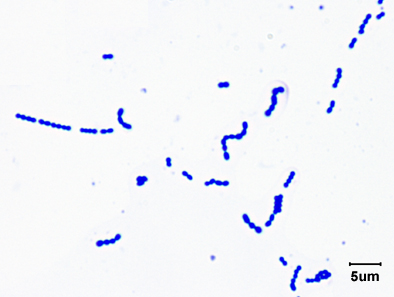
- ß-Haemolytic Streptococcus
- Commonly cause
- Erysipelas
- Strep Throat
- Impetigo
- Infective Endocarditis (SBE)
- Rheumatic Fever
- Acute Glomerulonephritis
Treatment
- All sensitive to Penicillin G
Reviewed by Professor Phong Tran, Head of Orthopaedic Surgery, Western Health. Last updated 10 October 2026.