
Definition
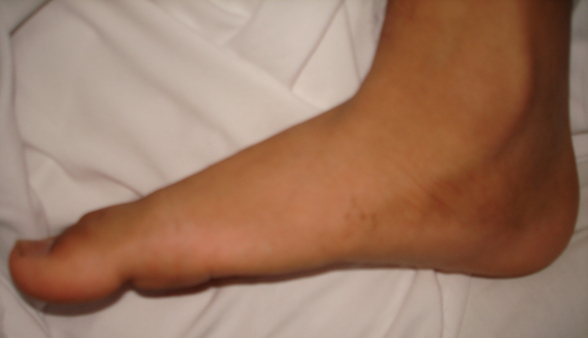
- Progressive failure of tibialis posterior, the most common cause of adult acquired flatfoot
- Now termed progressive collapsing foot deformity
Aetiology
- Hypovascular watershed zone posterior and distal to the medial malleolus
- Risk factors are female sex, age over 40, obesity, hypertension, diabetes and steroid injection
- Spring ligament and deltoid failure follow tendon failure
Clinical Features
- Medial ankle pain and swelling
- Too many toes sign from behind
- Unable to perform a single leg heel raise, or heel fails to invert
- Forefoot abduction and loss of the medial arch
- Lateral pain from subfibular impingement in later stages
Classification
| Stage | Features | Management |
|---|---|---|
| I | Tenosynovitis, no deformity | Orthosis, immobilisation, tenosynovectomy |
| II | Flexible flatfoot | FDL transfer and medialising calcaneal osteotomy, with or without lateral column lengthening and spring ligament repair |
| III | Fixed hindfoot valgus | Triple arthrodesis |
| IV | Valgus tilt of the talus from deltoid failure | Triple or tibiotalocalcaneal arthrodesis, with deltoid reconstruction if the ankle is flexible |
- Johnson and Strom, with stage IV added by Myerson
Investigations
- Weight bearing foot and ankle X-rays
- MRI for tendon tear and spring ligament
- Weight bearing radiographs of foot and ankle
- MRI or ultrasound for the tendon and spring ligament
Management
- Non-operative care with orthoses and boot for early disease
- Surgery is tailored to deformity, using the 2020 consensus classification of progressive collapsing foot deformity
Reviewed by Professor Phong Tran, Head of Orthopaedic Surgery, Western Health. Last updated 10 October 2026.