
Definition
- Recurrent giving way of the ankle after inversion injury
- Mechanical instability is pathological laxity. Functional instability is giving way without laxity
Pathology
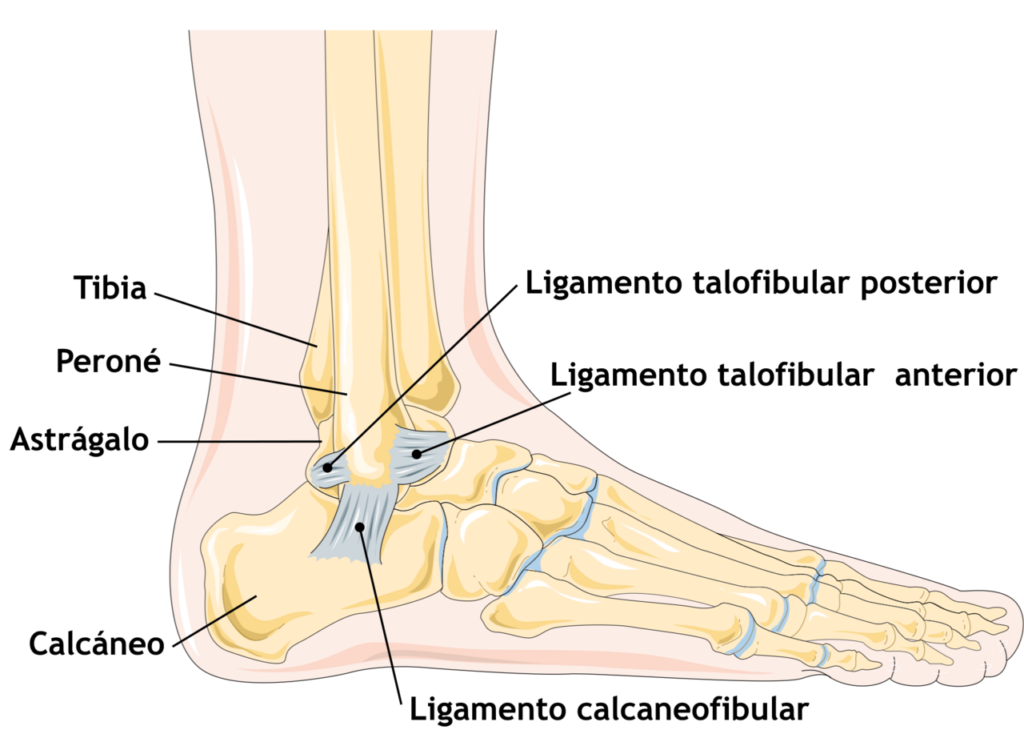
- ATFL is injured first, then the calcaneofibular ligament
- Chronic instability follows about 20% of sprains
- Associated with cavovarus foot, peroneal tendon tears and osteochondral lesions
- ATFL tears in plantarflexion and inversion, CFL with the ankle in dorsiflexion
- Syndesmosis and subtalar instability can coexist
Clinical Features
- Positive anterior drawer and talar tilt tests
- Check hindfoot alignment, peroneal strength and generalised laxity
- History of recurrent sprains on uneven ground
- Anterolateral tenderness and swelling
- Peroneal tendon tenderness and subluxation should be checked
Investigations
- Weight bearing X-rays, stress views if equivocal
- MRI for ligaments, peroneal tendons and talar dome
- Ultrasound shows dynamic ATFL laxity
- Arthroscopy confirms and treats associated lesions
Management
- Peroneal strengthening and proprioceptive rehabilitation, brace for sport
- Modified Brostrom repair with Gould augmentation for persistent instability
- Anatomical reconstruction with tendon graft for poor tissue, failed repair or hyperlaxity
- Correct cavovarus deformity and address associated lesions
- See Syndesmosis Injury for high ankle injury
- Lateralising calcaneal osteotomy for hindfoot varus
- Return to sport at 3 to 4 months after repair
- Repair gives good or excellent results in about 85 to 90%
Differential Diagnosis
- Peroneal tendon tear or subluxation
- Osteochondral lesion of the talus
- Syndesmosis injury
- Subtalar instability
- Fracture of the lateral process of the talus or anterior process of the calcaneus
Reviewed by Professor Phong Tran, Head of Orthopaedic Surgery, Western Health. Last updated 10 October 2026.