
Question
A 62 year old man has severe hip pain from osteoarthritis despite 12 months of non-operative care. He is listed for total hip arthroplasty.
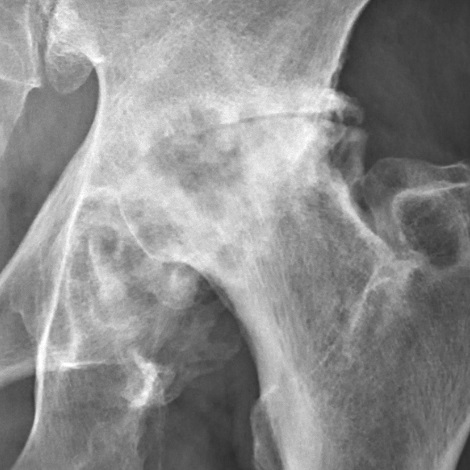
- What preoperative planning would you do?
- What are the bearing and fixation options?
- How would you consent him?
Answer
Preoperative planning
- Optimise medical comorbidities, anaemia, diabetes, smoking and weight
- Screen for skin, dental and urinary infection
- Template on a calibrated AP pelvis for cup and stem size, centre of rotation, offset and leg length
- Check for deformity, previous surgery, retained hardware and spinopelvic mobility
Bearing and fixation options
- Ceramic or metal head on highly cross linked polyethylene is most common
- Ceramic on ceramic has low wear but risks squeaking and fracture
- Metal on metal is no longer used because of adverse reaction to metal debris
- Uncemented press fit cups are common in Australia, with cemented stems favoured in older patients with poor bone, as shown by AOANJRR data
- Dual mobility cups for patients at high risk of dislocation
Consent
- Expected benefits of pain relief and function, with high satisfaction and about 90% survival at 15 years
- Infection about 1%, dislocation 1 to 2%, leg length discrepancy, periprosthetic fracture and nerve injury (sciatic nerve with the posterior approach)
- VTE, medical complications and death
- Wear, loosening and revision
- Document the discussion and provide written information
Related pages
Author Contributions
Orthofracs team
Reviewed by Professor Phong Tran, Head of Orthopaedic Surgery, Western Health. Last updated 10 October 2026.