
Question
A 68 year old man has 12 months of clumsy hands, difficulty with buttons and an unsteady gait.
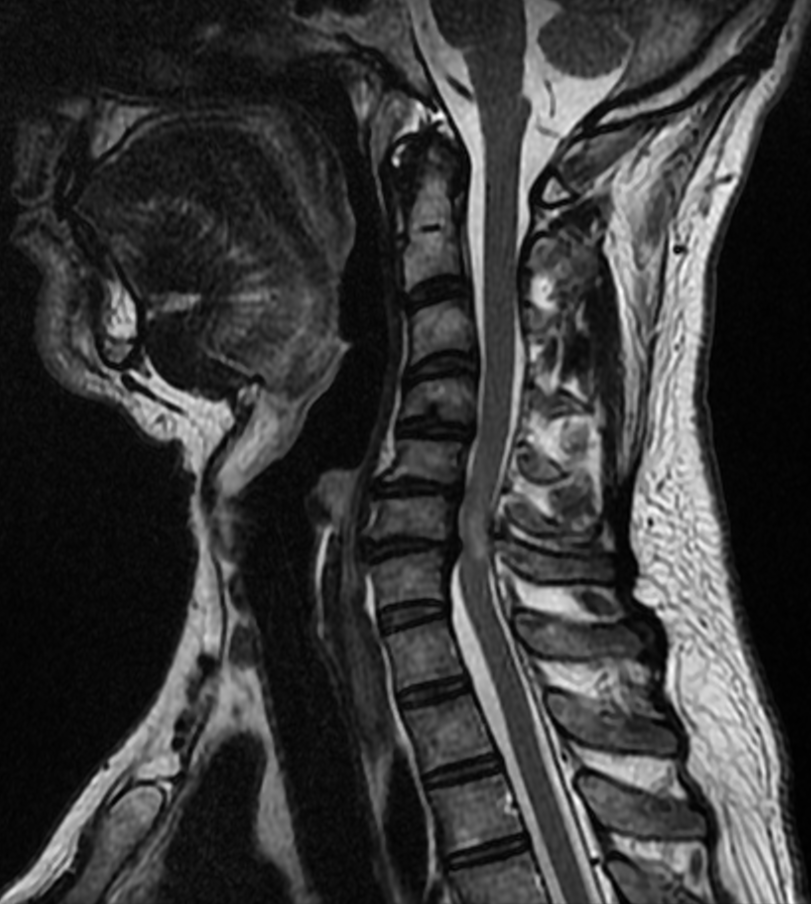
- What is the most likely diagnosis and what are the examination findings?
- What investigations would you request?
- How would you manage him?
Answer
Diagnosis and examination
- Degenerative cervical myelopathy from spondylosis, disc osteophyte complexes, ligamentum flavum hypertrophy or OPLL
- Upper motor neurone signs with hyperreflexia, clonus and upgoing plantars
- Hoffmann sign, inverted supinator reflex and finger escape sign
- Grip and release test under 20 in 10 seconds
- Broad based gait and positive Romberg test
- Lhermitte sign
Investigations
- Cervical radiographs with flexion and extension views for alignment and instability
- MRI for cord compression and T2 signal change in the cord
- CT for OPLL and bony anatomy
- Grade severity with the modified Japanese Orthopaedic Association (mJOA) score
Management
- Mild myelopathy can be observed with close review or decompressed, while moderate and severe myelopathy should be decompressed (AO Spine guideline)
- Anterior cervical discectomy and fusion or corpectomy for one to three levels with kyphosis
- Posterior laminoplasty or laminectomy and fusion for multilevel disease with preserved lordosis
- Surgery aims to stop progression, and improvement is less predictable with long standing disease
Related pages
Author Contributions
Orthofracs team
Reviewed by Professor Phong Tran, Head of Orthopaedic Surgery, Western Health. Last updated 10 October 2026.