
Question
A 45 year old man with HIV infection presents with 6 months of thoracolumbar back pain and weight loss.
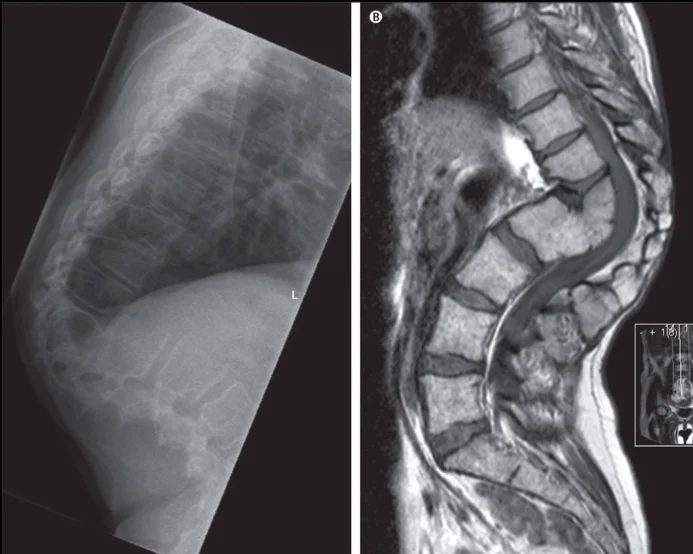
- What is the deformity and likely diagnosis?
- What are the at risk signs of progressive kyphosis?
- What is the management?
Answer
Deformity and diagnosis
- Angular kyphosis (gibbus) from anterior vertebral body destruction and collapse
- Spinal tuberculosis (Pott disease), with paradiscal involvement, subligamentous spread and a paravertebral abscess
- HIV and immigration from endemic regions are risk factors
Spine at risk signs (Rajasekaran)
- Separation of the facet joints at the apex
- Posterior retropulsion of the vertebral fragments
- Lateral translation of the vertebrae on the AP view
- Toppling sign, with the upper vertebra tilting so that a line along its anterior surface crosses the middle of the vertebra below
- Children with two or more signs are at high risk of progression with growth
Investigations
- MRI for abscess, cord compression and skip lesions
- CT guided biopsy for acid fast bacilli, GeneXpert PCR, culture and sensitivities
- Chest radiograph, HIV viral load and CD4 count
Management
- Antituberculous chemotherapy for 9 to 12 months (isoniazid, rifampicin, pyrazinamide and ethambutol), with infectious diseases input
- Start antiretroviral therapy and watch for immune reconstitution syndrome
- Surgery for neurological deficit, instability, progressive or severe kyphosis, large abscesses and failed medical treatment
- Anterior debridement and strut grafting with posterior instrumentation, or posterior vertebral column resection for rigid deformity
Related pages
Author Contributions
Orthofracs team
Reviewed by Professor Phong Tran, Head of Orthopaedic Surgery, Western Health. Last updated 10 October 2026.