
Question
A 15 year old boy is referred with poor posture and thoracic back pain. His kyphosis does not correct on extension.
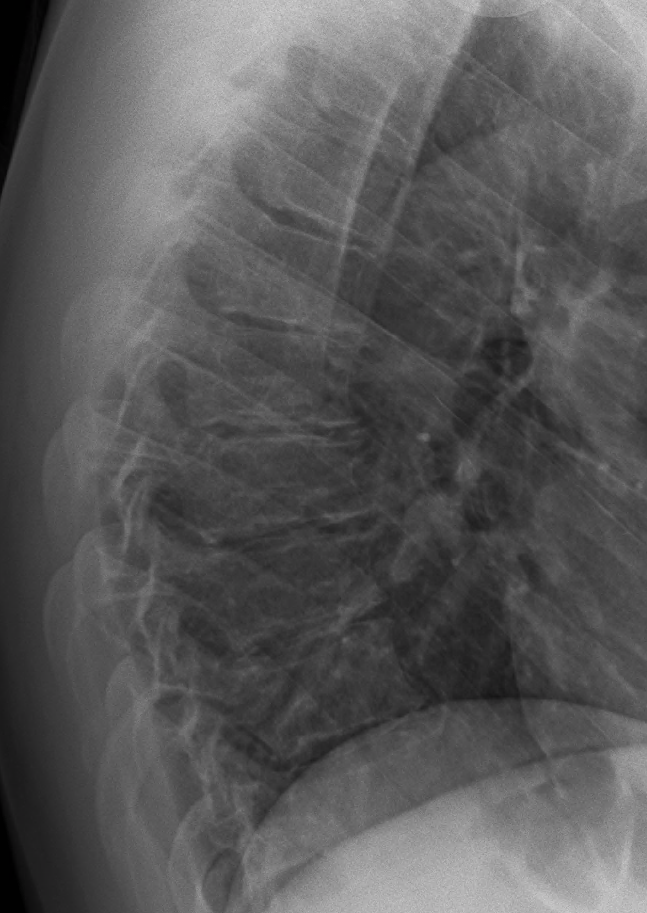
- What is the diagnosis and how is it defined?
- How is it managed?
- What are the indications and risks of surgery?
Answer
Diagnosis
- Scheuermann kyphosis
- Sorensen criteria are anterior wedging of 5 degrees or more in three adjacent vertebrae
- Endplate irregularity, Schmorl nodes and disc narrowing
- Thoracic kyphosis over 45 degrees that is rigid on hyperextension, unlike postural kyphosis
- Lumbar spondylolysis is more common
Management
- Physiotherapy and observation for curves under 60 degrees
- Bracing for curves of 60 to 75 degrees in the skeletally immature
- Pain usually settles at skeletal maturity
Surgery
- Indicated for curves over 75 degrees, progression, refractory pain or neurological deficit
- Posterior instrumented fusion with Ponte osteotomies
- Fuse from the proximal end vertebra to the sagittal stable vertebra to avoid junctional kyphosis
- Limit correction to about half the deformity
- Risks include proximal and distal junctional kyphosis and neurological injury
Related pages
Author Contributions
Orthofracs team
Reviewed by Professor Phong Tran, Head of Orthopaedic Surgery, Western Health. Last updated 10 October 2026.