
Definition
- Autosomal dominant muscular dystrophy with weakness of face, shoulder and upper arm
Aetiology
- Contraction of D4Z4 repeat on chromosome 4q35 in FSHD1
- Aberrant DUX4 expression in muscle
Clinical Features
- Affects both sexes
- Onset in adolescence or early adulthood
- Asymmetric weakness
- Incomplete eye closure
- Inability to purse lips or whistle
- Transverse smile
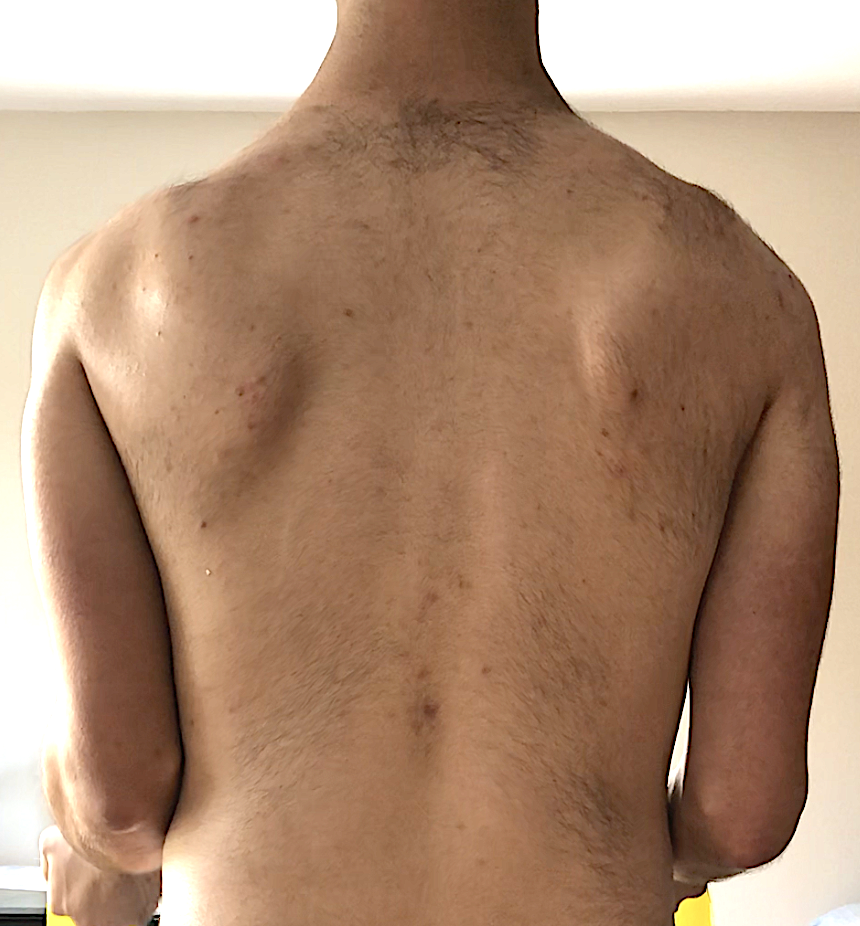
- Scapular winging with the scapula riding up on attempted elevation
- Deltoid relatively spared, with wasted biceps and triceps giving Popeye arms
- Beevor sign from lower abdominal weakness
- Foot drop later in the disease
- Normal IQ
- Good life expectancy
Investigations
- Genetic testing for D4Z4 contraction
- CK normal or mildly raised
Management
- Physiotherapy and AFOs for foot drop
- Consider scapulothoracic fusion
- Candidates show improved elevation when the examiner manually stabilises the scapula
- Requires good deltoid strength
- Fusion improves abduction and forward flexion and reduces fatigue
Complications
- Pneumothorax and pleural effusion after scapulothoracic fusion
- Brachial plexus palsy and nonunion after fusion
- Hearing loss and retinal vasculopathy in early onset disease
Reviewed by Professor Phong Tran, Head of Orthopaedic Surgery, Western Health. Last updated 10 October 2026.