
Question
A newborn boy has a rigid deformity of the right foot, with the heel in equinus and varus and the forefoot adducted.
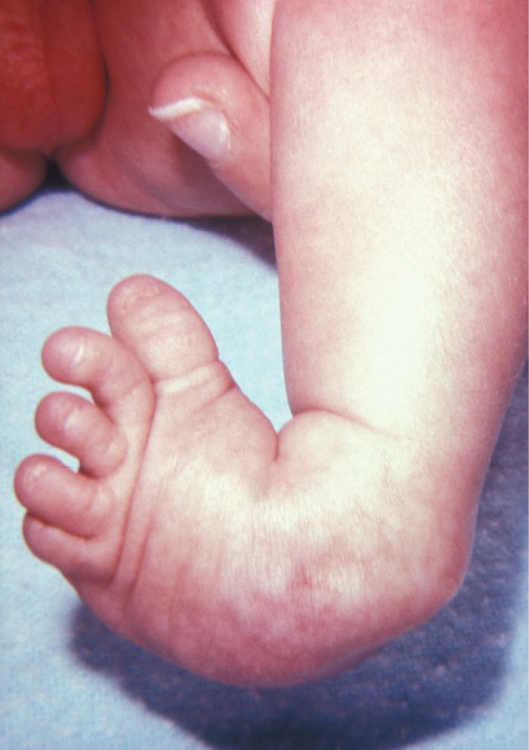
- What is the diagnosis and how is severity assessed?
- Describe the Ponseti method.
- What are the causes of recurrence and how are they managed?
Answer
Diagnosis and severity
- Idiopathic congenital talipes equinovarus (clubfoot), bilateral in about half
- Exclude neuromuscular and syndromic causes such as spina bifida and arthrogryposis
- Pirani score (0 to 6) or Dimeglio score to grade severity and monitor progress
Ponseti method (CAVE)
- Correct cavus first by supinating the forefoot and elevating the first ray
- Abduct the foot around the talar head as the fulcrum, without pronating, to correct adduction and varus
- Weekly long leg plaster casts, usually 5 to 6
- Percutaneous Achilles tenotomy in about 85 to 90% to correct residual equinus, then a final cast for 3 weeks
- Foot abduction brace (boots and bar) full time for 3 months, then at night until age 4 to 5
Recurrence and management
- Poor brace compliance is the main cause
- Repeat casting and repeat tenotomy
- Tibialis anterior tendon transfer to the lateral cuneiform for dynamic supination after age 3
- Extensive soft tissue releases and osteotomies are reserved for resistant feet, as stiffness is common
Related pages
Author Contributions
Orthofracs team
Reviewed by Professor Phong Tran, Head of Orthopaedic Surgery, Western Health. Last updated 10 October 2026.