
Question
A 2 year old boy with blue sclerae has had his third femoral fracture.
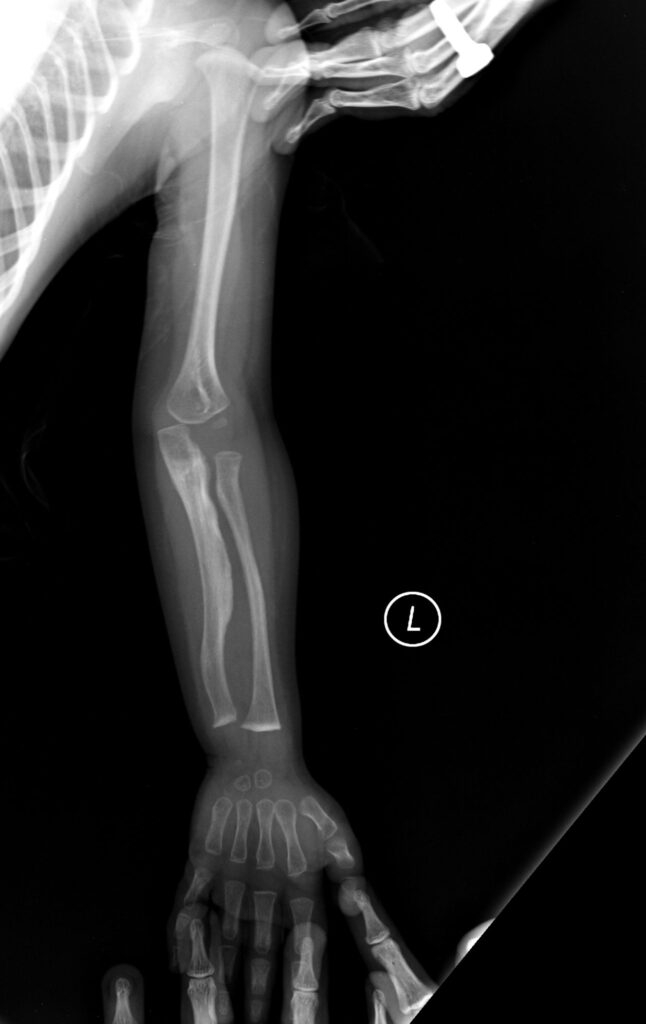
- What is the diagnosis and how is it classified?
- What is the medical management?
- What are the orthopaedic surgical principles?
Answer
Diagnosis and classification
- Osteogenesis imperfecta, most often an autosomal dominant defect in type I collagen (COL1A1 or COL1A2)
- Sillence classification type I mild with blue sclerae, type II lethal perinatal, type III progressively deforming, type IV moderate with normal sclerae
- Other features include dentinogenesis imperfecta, hearing loss, ligamentous laxity and short stature
- Differentiate from non-accidental injury with a careful history, skeletal survey and genetic testing
Medical management
- Intravenous bisphosphonates (pamidronate or zoledronic acid) reduce fracture rates and bone pain and improve vertebral shape
- Vitamin D and calcium sufficiency
- Physiotherapy and hydrotherapy to maintain mobility
Surgical principles
- Fractures heal at a normal rate, but recurrent fractures cause bowing
- Telescoping intramedullary rods (such as Fassier-Duval) with multiple osteotomies to correct long bone deformity
- Avoid plates, which cause stress risers
- Monitor for scoliosis, basilar invagination and hearing loss
Related pages
Author Contributions
Orthofracs team
Reviewed by Professor Phong Tran, Head of Orthopaedic Surgery, Western Health. Last updated 10 October 2026.