
Overview
- Core skill for many adult and paediatric fractures
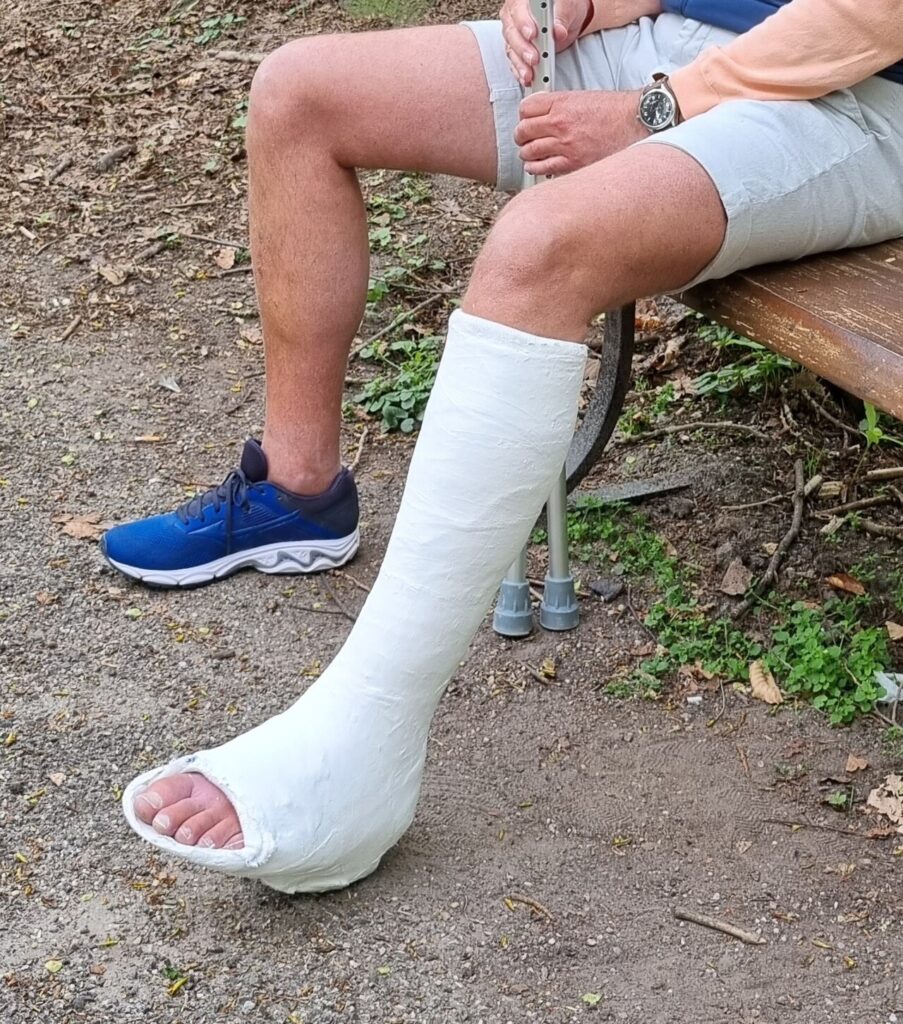
- Plaster of Paris is cheap and mouldable, fibreglass lighter and stronger
- Pad bony prominences, three point mould and position the limb correctly
- Backslab or split cast while swelling is expected
- Advise elevation and warning signs
- Increasing pain under a cast needs urgent review
Management
- Charnley principles are analgesia, traction, then recreating and reversing the mechanism
- The intact periosteal hinge, usually concave, controls reduction
- Three point fixation keeps the hinge under tension, giving a curved mould
- Immobilising the joint above and below controls rotation
- Plaster of Paris is calcium sulphate hemihydrate, setting exothermically to the dihydrate
- Warmer water and thicker casts increase heat and burn risk
- Full strength only once dry, after 24 to 48 hours
- Fibreglass is lighter, stronger and more radiolucent but harder to mould
- Roll without tension and mould with palms, avoiding fingertip indentation
- Backslab or split cast acutely to allow for swelling
- Forearm cast index, sagittal over coronal internal width, should be below 0.8
- Distal radius moulded in slight flexion and ulnar deviation, avoiding the Cotton-Loder position
- U-slab then Sarmiento functional brace for humeral shaft fractures
- Hip spica for femoral shaft fractures from about 6 months to 5 years
- Ponseti serial casting for congenital talipes equinovarus
Complications
- Compartment syndrome, reduced by splitting the cast and padding down to skin
- Pressure sores, thermal burns and saw burns
- Loss of reduction as swelling settles
- Common peroneal nerve palsy at the fibular neck
- Venous thromboembolism with lower limb casts
- Complex regional pain syndrome
Reviewed by Professor Phong Tran, Head of Orthopaedic Surgery, Western Health. Last updated 10 October 2026.