
Question
A 79 year old woman with osteoporosis is listed for total hip arthroplasty. You plan a cemented femoral stem.
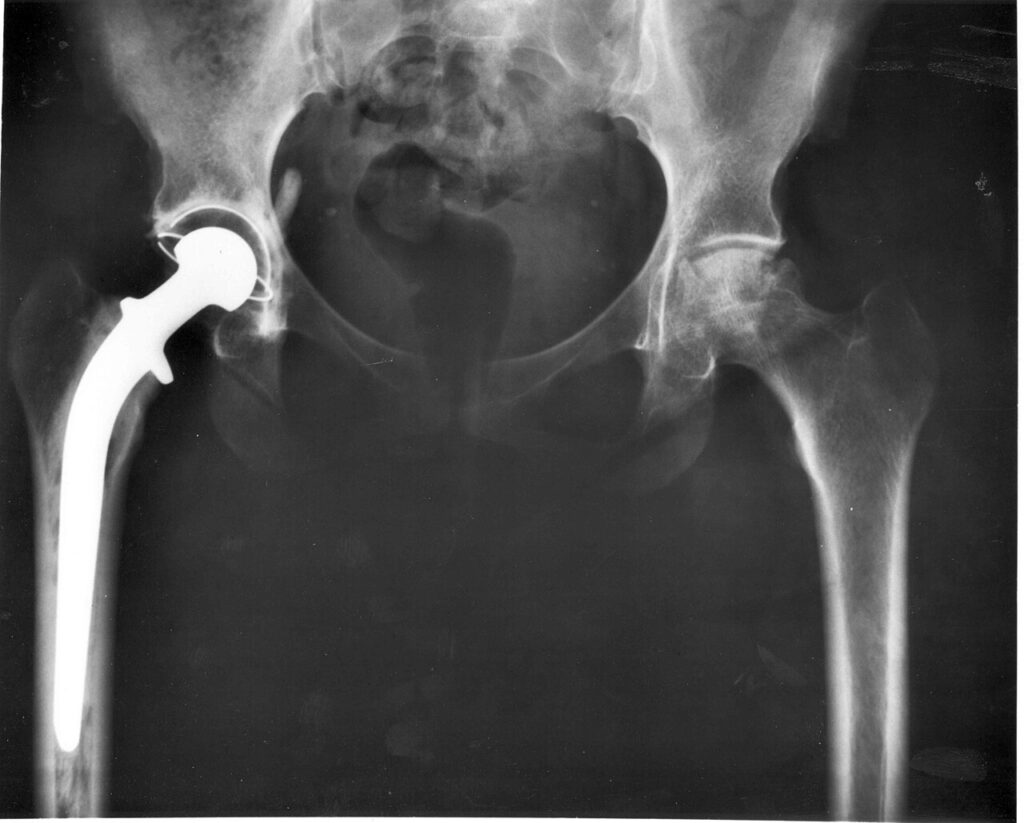
- Compare taper slip and composite beam cemented stems.
- Describe modern cementing technique.
- What is bone cement implantation syndrome and how is it reduced?
Answer
Cemented stem designs
| Feature | Taper slip (Exeter, CPT) | Composite beam (Charnley, Lubinus) |
|---|---|---|
| Surface | Highly polished | Matt or roughened |
| Fixation | Subsides in the cement mantle, generates hoop stress | Bonded to cement |
| Collar | Collarless | Often collared |
| Failure | Subsidence if excessive | Debonding and loosening |
Cementing technique
- Distal cement restrictor 2 cm below the stem tip
- Pulsatile lavage and drying of the canal
- Vacuum mixing to reduce porosity
- Retrograde filling with a cement gun
- Pressurisation with a proximal seal
- Stem centralisers
- Mantle of at least 2 mm, avoid voids (Barrack grading)
Bone cement implantation syndrome
- Hypoxia, hypotension, arrhythmia or cardiac arrest at cementing
- Fat and marrow emboli forced into the circulation
- Higher risk in hip fracture, frail and cardiopulmonary disease
- Communicate with the anaesthetist before cementing
- Lavage and suction of the canal, vent the femur
- Avoid excessive pressurisation in high risk patients
Related pages
Author Contributions
Orthofracs team
Reviewed by Professor Phong Tran, Head of Orthopaedic Surgery, Western Health. Last updated 10 October 2026.