
Question
A 55 year old man has groin pain 9 years after a large head metal on metal total hip replacement.
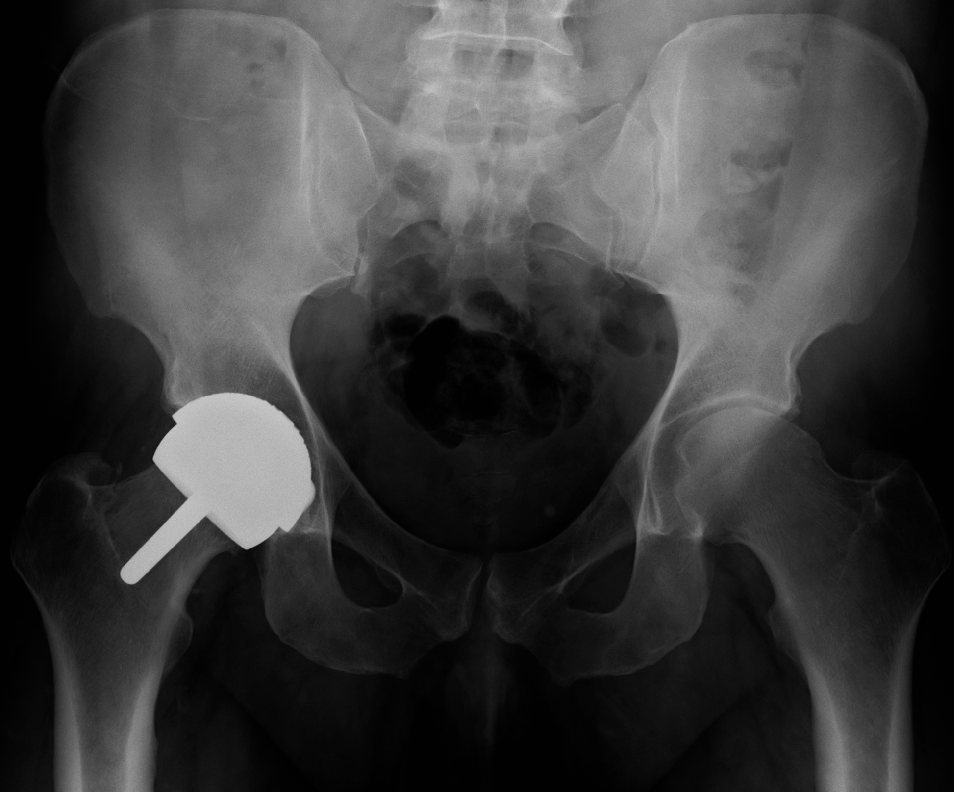
- What is the concern and how is it investigated?
- What are the indications for revision?
- Why is revision difficult?
Answer
Concern
- Adverse reaction to metal debris, including pseudotumour and ALVAL
- Risk factors are female sex, small components, high cup inclination and certain implants such as the ASR
Investigation
- Whole blood cobalt and chromium levels
- Metal artefact reduction MRI or ultrasound for soft tissue masses
- Radiographs for component position and osteolysis
- Aspiration and inflammatory markers to exclude infection
Revision indications
- Symptoms with raised ions or a soft tissue mass
- Enlarging pseudotumour or rising ion levels
- Loosening or osteolysis
Difficulties
- Soft tissue destruction and abductor necrosis
- High dislocation rates after revision
- Poorer outcomes than revision for other causes
- The AOANJRR reports higher revision rates for large head metal on metal hips
Related pages
Author Contributions
Orthofracs team
Reviewed by Professor Phong Tran, Head of Orthopaedic Surgery, Western Health. Last updated 10 October 2026.