
Definition
- Obsolete name for primary bone lymphoma
- Lymphoma in bone without nodal or visceral disease at diagnosis, other than regional nodes
Epidemiology
- Small percentage of primary malignant bone tumours and extranodal lymphomas
- Most patients older than 30, peaking in middle and later adult life
- Male predominance
Pathology
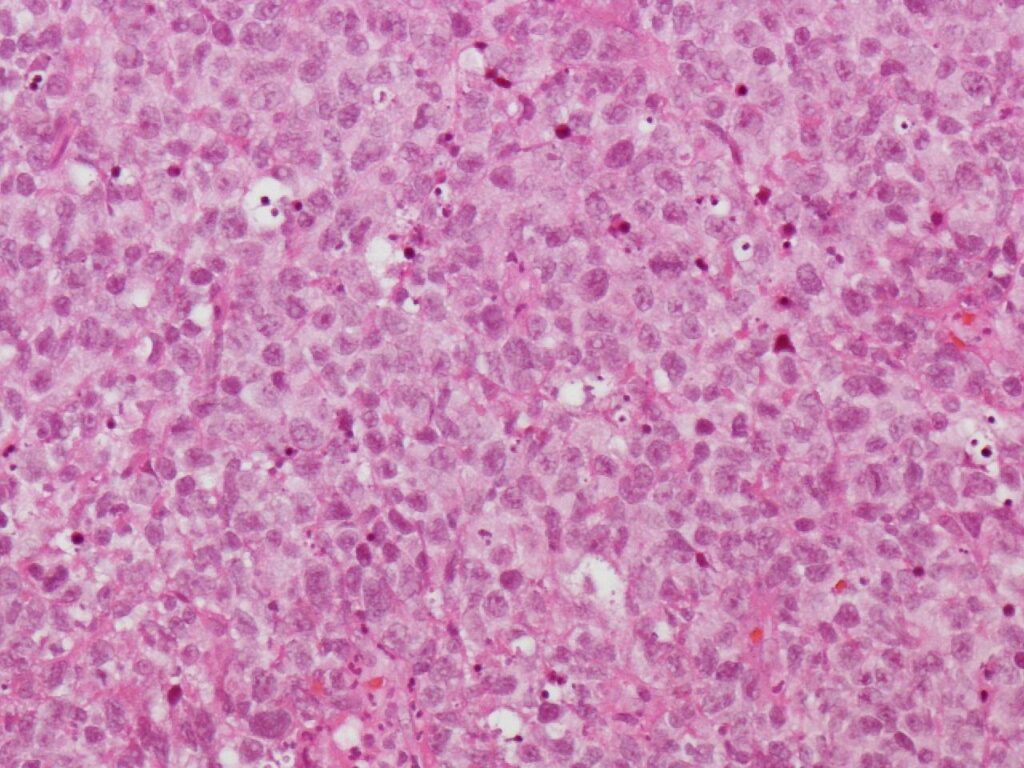
- Most cases are diffuse large B-cell lymphoma (DLBCL)
- Sheets of atypical lymphoid cells permeating between trabeculae and through cortex
- Crush artefact on biopsy is common
- CD45, CD20 and CD79a positive
- Part of the small round blue cell tumour differential
Clinical Features
- Localised bone pain, often for months
- Soft tissue swelling or pathological fracture
- Often systemically well, with fewer B symptoms than nodal lymphoma
- Femur, pelvis, humerus, tibia and spine
Investigations
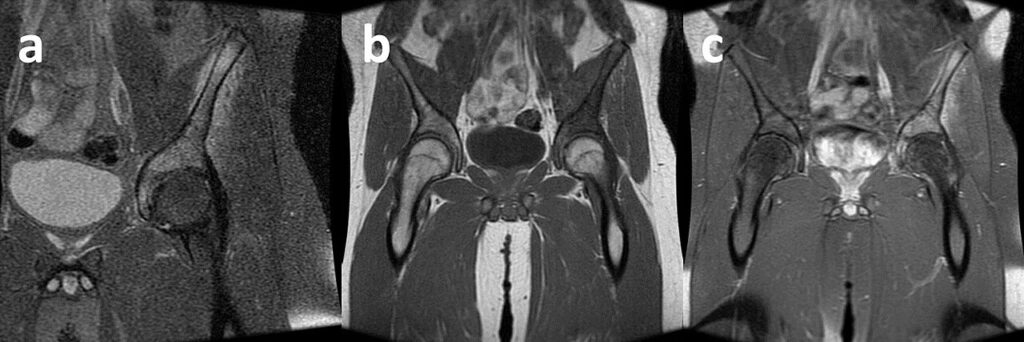
- Permeative or moth-eaten metadiaphyseal lysis with a wide zone of transition
- Radiographs may be subtle or show mixed sclerosis
- Ivory vertebra with spinal involvement
- Large soft tissue mass with relatively little cortical destruction
- MRI shows extensive marrow replacement
- PET-CT for staging, with marrow assessment as indicated
- Biopsy needs fresh tissue for flow cytometry, so warn the haematology laboratory
Differential Diagnosis
- Ewing sarcoma
- Osteomyelitis
- Metastatic carcinoma and myeloma
- Langerhans cell histiocytosis
- Small cell osteosarcoma
Management
- R-CHOP chemoimmunotherapy is the primary treatment
- Consolidation radiotherapy to the involved site in selected patients
- Surgery limited to biopsy and stabilisation of actual or impending fractures
- Wide resection is not indicated, unlike bone sarcomas
Prognosis
- Good compared with most primary malignant bone tumours
- Better than many nodal DLBCL presentations
- Multifocal skeletal disease and adverse IPI factors reduce survival
Reviewed by Professor Phong Tran, Head of Orthopaedic Surgery, Western Health. Last updated 10 October 2026.