
Definition
- End organ resistance to PTH, giving hypocalcaemia and hyperphosphataemia despite raised PTH
- Albright hereditary osteodystrophy (AHO) is the skeletal and somatic phenotype seen with type 1a
Aetiology
- Inactivating GNAS mutations affecting the Gs alpha subunit of the PTH receptor pathway
- Maternal transmission gives type 1a with hormone resistance plus AHO
- Paternal transmission gives pseudopseudohypoparathyroidism with AHO but normal biochemistry
Clinical Features
- Short stature, round face and central obesity
- Intellectual disability
- Tetany and CNS irritability, including seizures, from hypocalcaemia
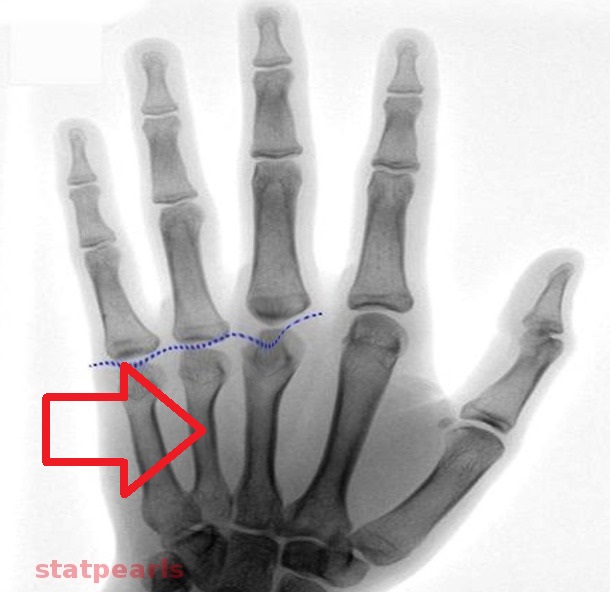
- Brachydactyly with short fourth and fifth metacarpals
- Short first distal phalanx of the thumb
- Subcutaneous and heterotopic ossification
Investigations
- Low calcium, high phosphate and high PTH
- X-ray shows shortened metacarpals and metatarsals, with knuckle dimpling on clenched fist
- Basal ganglia calcification on CT
Differential Diagnosis
- Hypoparathyroidism, where PTH is low
- Turner syndrome, which also shortens the fourth metacarpal
- Brachydactyly type E
Management
- Calcitriol and oral calcium, titrated to normal calcium without hypercalciuria
- Screen for associated thyroid and other hormone resistance
- Excise symptomatic heterotopic ossification only when mature, accepting recurrence risk
Reviewed by Professor Phong Tran, Head of Orthopaedic Surgery, Western Health. Last updated 10 October 2026.