
Definition
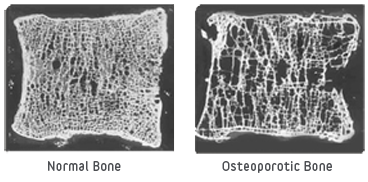
- Low bone mass and microarchitectural deterioration causing fragility and fracture risk
- WHO definition is a DXA T-score of -2.5 or lower at hip or spine
- Osteopenia is a T-score between -1 and -2.5
- A minimal trauma fracture establishes the diagnosis clinically
- About 1 in 2 women and 1 in 3 men over 60 will have a minimal trauma fracture
Aetiology
- Primary, postmenopausal and age related
- Secondary causes are corticosteroids, hypogonadism, hyperthyroidism, hyperparathyroidism, coeliac disease, myeloma, alcohol and smoking
- Aromatase inhibitors and androgen deprivation therapy
- Anticonvulsants and proton pump inhibitors
Investigations
- DXA of hip and lumbar spine
- Calcium, vitamin D, PTH, renal and thyroid function, and myeloma screen
- Fracture risk with the Garvan calculator or FRAX
- Thoracolumbar spine radiographs for height loss or back pain
- Coeliac serology and testosterone in men where indicated
Management
- Calcium and vitamin D replacement
- Resistance and balance exercise, falls prevention
- Antiresorptives first line, bisphosphonates or denosumab
- Anabolic agents for very high risk or multiple vertebral fractures
- Zoledronic acid after hip fracture reduced new fractures and mortality (HORIZON Recurrent Fracture Trial, NEJM 2007)
- Fracture liaison services close the treatment gap after fragility fracture
- See Inhibitors of Bone Resorption and Vitamin D
Fracture Liaison
- Fracture liaison services identify and treat patients after a fragility fracture
- Treatment after a first fracture prevents further fractures
- Repeat DXA every 2 to 3 years to monitor treatment
Reviewed by Professor Phong Tran, Head of Orthopaedic Surgery, Western Health. Last updated 10 October 2026.