
Overview
- Seronegative spondyloarthropathy strongly linked to HLA-B27
- Sacroiliitis, then ascending ankylosis with syndesmophytes and bamboo spine
- Fixed kyphotic deformity
- Low energy cervical fractures, often through the disc space, highly unstable
- Epidural haematoma and neurological injury are frequent
- Immobilise in the usual posture, never force into neutral
- Long construct fixation, osteotomy to restore horizontal gaze
Western Health Orthopaedic Registrar presentation – Arthropathy of the Spine by Dr Devinder Garewal
Clinical Features
- Inflammatory back pain with morning stiffness that improves with exercise
- Reduced chest expansion and positive modified Schober test
- Cervical kyphosis with loss of horizontal gaze, and atlantoaxial subluxation in some
- Anterior uveitis, aortitis, conduction defects, apical pulmonary fibrosis and inflammatory bowel disease
Investigations
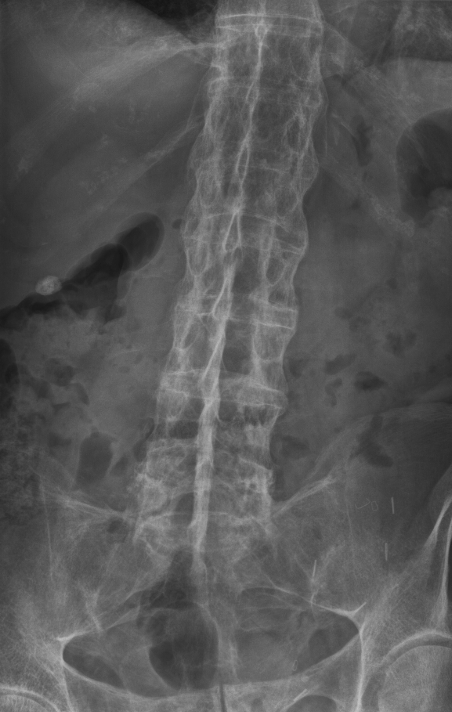
- Sacroiliitis is usually the earliest radiographic finding
- Romanus lesions, shiny corners and vertebral squaring
- Thin marginal syndesmophytes progressing to bamboo spine
- Dagger sign and trolley track sign
Management
- Treat neck pain after trauma as a fracture until proven otherwise
- Fractures cluster at the cervicothoracic junction, through all three columns
- Whole spine CT, and MRI for epidural haematoma
- Immobilise in pre-injury kyphosis, avoiding flat boards and standard collars
- Long-segment posterior instrumentation, as anterior fixation alone has a high failure rate
- Halo vest is poorly tolerated
- Chin on chest deformity is measured by chin brow vertical angle with hips and knees extended
- Correct hip flexion contractures first
- Simmons C7 to T1 extension osteotomy, now often C7 pedicle subtraction with neuromonitoring
- C7 is chosen as the vertebral artery enters at C6, the canal is wide and C8 loss is tolerated
- Leave slight residual flexion to see the ground
Complications
- C8 radiculopathy
- Cord injury and quadriplegia
- Subluxation at the osteotomy and non-union
Reviewed by Professor Phong Tran, Head of Orthopaedic Surgery, Western Health. Last updated 10 October 2026.