
Aetiology & Epidemiology
- Primary osteoarthritis (Osteoarthritis) of the hip
- a diagnosis made by exclusion
- Secondary osteoarthritis of hip
- osteonecrosis, trauma, sepsis, or rheumatoid arthritis
- congenital hip disease & slipped capital femoral epiphysis
Prevalence
- 3% to 6% in the Caucasian population
- Asian, black, & East Indian populations have very low prevalence of hip Osteoarthritis
Aetiology
- Genetic
- Family studies from Sweden, Britain, & the United States show ↑ rates of hip Osteoarthritis in first-degree relatives of the index patient when compared with the normal population
- low prevalence of hip Osteoarthritis in Asian & black populations in their native countries; the low incidence of total joint replacement for primary Osteoarthritis in Asian, black, & Hispanic populations in North America; & the familial association of hip Osteoarthritis in Caucasians all suggest that genetic factors may be involved in the occurrence of this disease
- Occupational
- Occupations requiring heavy lifting, farming, & elite sports activity are associated with ↑ rates of hip Osteoarthritis
Osteoarthritis of the hip
Definition
- Degeneration of the tissues of the hip joint, including hyaline cartilage, fibrocartilage, bone, & synovium
Epidemiology
- generalised Osteoarthritis
- >3 joint groups
- incidence of Osteoarthritis was not related to latitude or longitude
- highest prevalence of Osteoarthritis occurred in the Caucasians
- It was noted that Osteoarthritis preferentially affected the distal interphalangeal joints & the first carpometacarpal joints of the hands, the knees, & the first metatarsophalangeal joints
- Kellgren’s grading system was used to characterise the degree of hip arthritis as
- absent (grade 0)
- doubtful (grade 1)
- minimal (grade 2)
- moderate (grade 3)
- severe (grade 4).
- Causes of Secondary Osteoarthritis & Their Radiographic Appearance
Hip Disease in Hip Surgery
- Patients
- primary Osteoarthritis was the underlying disorder in nearly 90% of osteoarthritic hips
- Rate of THR
- Caucasians 75 per 100,000 persons
- blacks had half the incidence
- Asians had only one tenth.
Incidence of Predisposing Anatomic Abnormalities
- Hip dysplasia
- If primary Osteoarthritis of the hip is due to a subtle dysplasia, it should be seen frequently in Japanese persons, with their extremely high rate of dysplasia; however, primary Osteoarthritis is rare in that population
- incidence of DDH in Caucasians is 0.5%. If Osteoarthritis developed in all children with DDH, this would account for only one eighth of the cases of Osteoarthritis in the Caucasian population
- In summary, when controlled studies of acetabular measurements are done & the rates of DDH & Osteoarthritis for each racial subgroup are considered, DDH accounts for only a small percentage (5% to 10%) of hip Osteoarthritis in Caucasians
- clinical SUFE in the adolescent occurs in only 1 of every 800 boys (an incidence of only 0.125%)
- Anatomically normal femora accounted for more than 80% of the Osteoarthritis in their series
- Furthermore, although there is little primary Osteoarthritis in the black & Polynesian populations, as well as a low incidence of THR performed because of Osteoarthritis, these populations have two to four times the rate of SUFE in Caucasians.
Aetiology
- Body Weight
- Osteoarthritis of the knee has been shown to be consistently related to obesity
- Hip Osteoarthritis: controversial
- no relationship between body weight or body-mass index & the occurrence of hip Osteoarthritis. However, other studies have shown an ↑ risk of Osteoarthritis of the hip in obese individuals
- Occupational Factors
- ? exacerbate hereditary predisposition to Osteoarthritis of the hip
- work
- physical demands of work have been estimated to account for 40% of cases of hip Osteoarthritis
- carrying heavy loads
- farmers
- track, field, & racket sports soccer players
- work
- ? exacerbate hereditary predisposition to Osteoarthritis of the hip
- Other Anatomic Considerations
- DDH
- acetabular abnormality
- femoral anteversion
- not shown
- Family Studies
- In summary, two different factors appear to be involved in the aetiology of Osteoarthritis. First, the lower rates of primary Osteoarthritis in population studies of non-Caucasians & the difference in rates of THR for primary Osteoarthritis in patients with various racial backgrounds living in a common environment suggest that it is a disease primarily of Caucasians
- Second, the relatively high incidence of the disease in siblings of Swedish & English patients who underwent THR because of primary Osteoarthritis suggests that genetic factors are operational as well
Radiographic Criteria
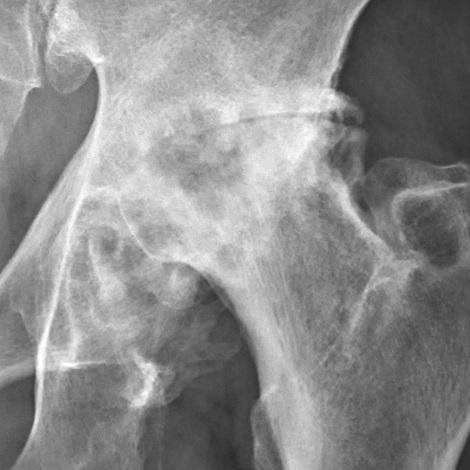
- rate of secondary Osteoarthritis in the Caucasian population was not significantly different from the rates for Chinese, Filipino, Hawaiian, & Japanese subjects
Summary
- Secondary Osteoarthritis of the hip
- when a condition such as DDH, SUFE, or Legg-Calvé-Perthes disease results in a predisposing anatomic abnormality that leads to hip degeneration due to mechanical factors
Reviewed by Professor Phong Tran, Head of Orthopaedic Surgery, Western Health. Last updated 10 October 2026.