
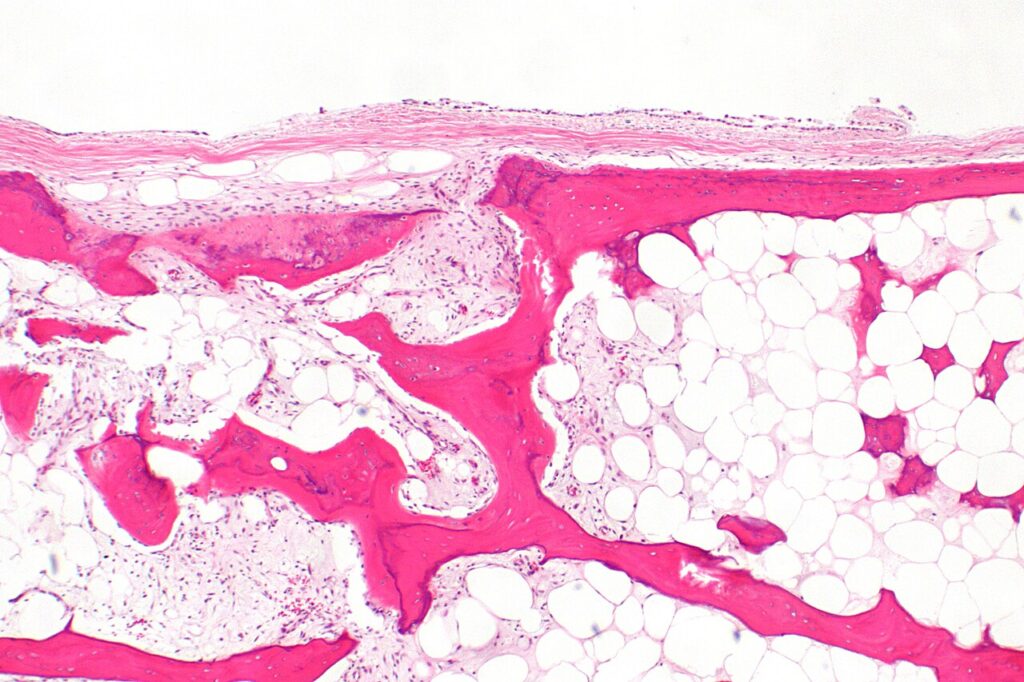
Definition
- Benign neoplastic proliferation of synovium forming cartilage nodules that detach as loose bodies
- Primary disease arises from synovial metaplasia, secondary disease follows osteoarthritis or trauma
- FN1 and ACVR2A gene rearrangements support a neoplastic origin
Epidemiology
- Age 30 to 50 years, more common in men
- Knee most common, then hip and elbow
- Rare in children
Clinical Features
- Pain, swelling, stiffness and locking
- Usually monoarticular
- Crepitus and restricted range of motion
- Palpable mass in superficial joints
- Symptoms are often present for years before diagnosis
Milgram Phases
- Phase I, active intrasynovial disease without loose bodies
- Phase II, transitional, with synovial nodules and free loose bodies
- Phase III, multiple free osteochondral bodies with quiescent synovium
Investigations
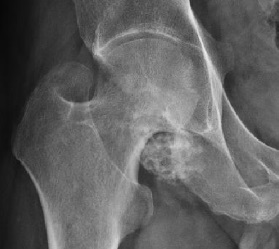
- Multiple calcified loose bodies of similar size on X-ray
- MRI shows non-calcified nodules
- Radiographs can be normal before nodules calcify
- Pressure erosions of bone at the capsular reflections
- CT defines the pattern of calcification
- Ring and arc calcification typical of chondroid matrix
Management
- Synovectomy and removal of loose bodies, open or arthroscopic
- Recurrence is common
- Rare transformation to chondrosarcoma
- Joint replacement for advanced secondary arthritis
- Hip disease may need surgical dislocation for complete synovectomy
Differential Diagnosis
- Osteoarthritis with loose bodies
- Pigmented villonodular synovitis
- Lipoma arborescens
- Tuberculous arthritis with rice bodies
Reviewed by Professor Phong Tran, Head of Orthopaedic Surgery, Western Health. Last updated 10 October 2026.