
Definition
- Vascular tumours between haemangioma and angiosarcoma in behaviour
- Epithelioid haemangioendothelioma (EHE) is the main orthopaedic variant
- WHO classes EHE as fully malignant, low to intermediate grade
Epidemiology
- Rare, most often in young and middle aged adults
- Arises in soft tissue, bone, liver and lung
- Bone EHE favours lower limb long bones, then pelvis, spine and ribs
Pathology
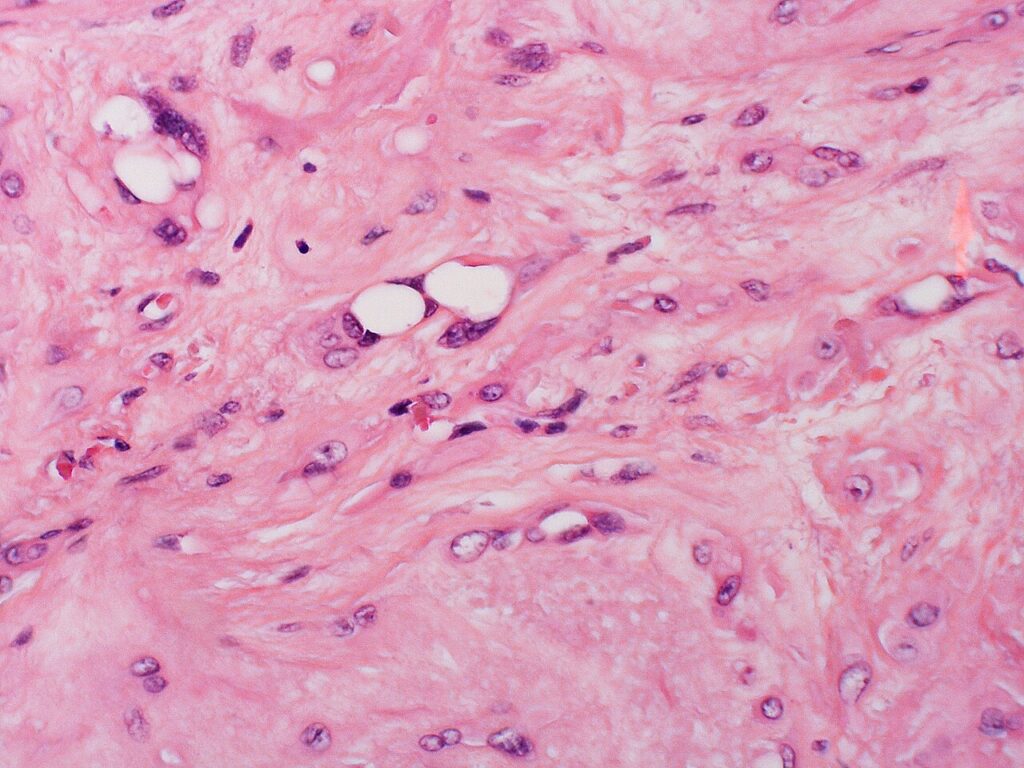
- Cords and nests of epithelioid endothelial cells in myxohyaline or chondroid-like stroma
- Intracytoplasmic vacuoles, sometimes containing red cells (“blister cells”)
- CD31, ERG and FLI1 positive
- Keratin positivity risks misdiagnosis as metastatic carcinoma
- Most carry a WWTR1 to CAMTA1 fusion, with nuclear CAMTA1 staining
- A minority carry a YAP1 to TFE3 fusion and look more vasoformative
Clinical Features
- Localised pain, with or without swelling
- Pathological fracture, or an incidental finding
- Multifocal bone disease is common, often clustered in one limb
Investigations
- Lytic lesions, sometimes expansile, with little periosteal reaction
- Multiple lesions in one limb suggest a vascular tumour
- MRI shows low T1 and high T2 signal with enhancement
- Whole body staging with CT chest and abdomen or PET
- Biopsy confirms the diagnosis
Differential Diagnosis
- Metastatic carcinoma and myeloma
- Epithelioid haemangioma
- Epithelioid angiosarcoma
- Chondroid tumours, owing to the stroma
Management
- Wide or marginal resection for solitary resectable lesions
- Curettage carries a higher recurrence risk
- Radiotherapy for unresectable, multifocal or spinal disease and close margins
- Multifocal or visceral disease under a sarcoma MDT, with surveillance for indolent cases
- Antiangiogenic agents or trametinib for progressive disease
Prognosis
- Unpredictable, with a prolonged course in many bone cases
- Pleural, extensive lung or liver involvement predicts worse outcome
- Better prognosis than angiosarcoma
Reviewed by Professor Phong Tran, Head of Orthopaedic Surgery, Western Health. Last updated 10 October 2026.