
Definition
- High grade malignant endothelial tumour
- Irregular anastomosing vascular channels
- Among the most aggressive soft tissue and bone sarcomas
Epidemiology
- Small proportion of soft tissue sarcomas, very rare in bone
- Predominantly older adults
Aetiology
- Prior radiotherapy, such as breast skin after breast conserving therapy
- Chronic lymphoedema, as in Stewart-Treves syndrome after mastectomy and axillary clearance
- Vinyl chloride, arsenic and thorotrast for hepatic angiosarcoma
- Rarely foreign material, implants or familial syndromes
- Bone lesions may arise in irradiated bone or bone infarcts
Clinical Features
- Scalp and face cutaneous lesions in the elderly
- Deep, rapidly growing, often painful limb mass
- Deep tumours may bleed and mimic haematoma
- Anaemia or coagulopathy may occur
- Bone disease presents with pain, swelling or fracture, often multifocal in one limb
Investigations
- Permeative or moth-eaten lysis, cortical destruction and soft tissue mass, usually without matrix
- MRI shows an avidly enhancing mass with haemorrhage and flow voids
- Staging with CT chest, abdomen and pelvis or PET
- Core biopsy at a sarcoma centre, expecting heavy bleeding
Pathology
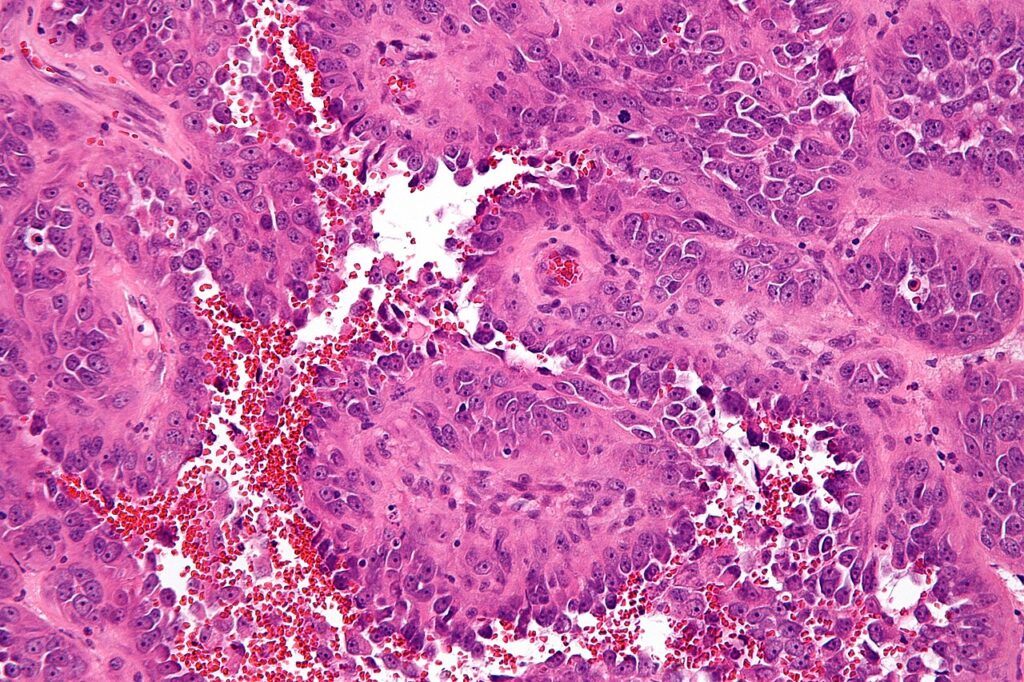
- Dissecting vascular channels to solid sheets of atypical epithelioid or spindle cells
- CD31, ERG and FLI1 positive, CD34 variable
- Epithelioid variants may express keratin and mimic carcinoma
- MYC amplification in radiation and lymphoedema associated tumours
Differential Diagnosis
- Epithelioid haemangioendothelioma
- Metastatic carcinoma, especially renal cell carcinoma
- Kaposi sarcoma
- Telangiectatic osteosarcoma in bone
- Organising haematoma
Management
- Wide resection with negative margins where feasible
- Radiotherapy to generous fields given infiltrative spread
- Chemotherapy with taxanes and anthracyclines has a larger role than in most sarcomas
- Amputation for multifocal limb disease when salvage cannot achieve local control
- Palliative systemic therapy for metastatic disease
Prognosis
- Poor, with high local recurrence and early metastasis
- Adverse factors are large size, deep site, older age and metastasis at presentation
- Cutaneous lesions extend beyond their visible margins
Reviewed by Professor Phong Tran, Head of Orthopaedic Surgery, Western Health. Last updated 10 October 2026.