
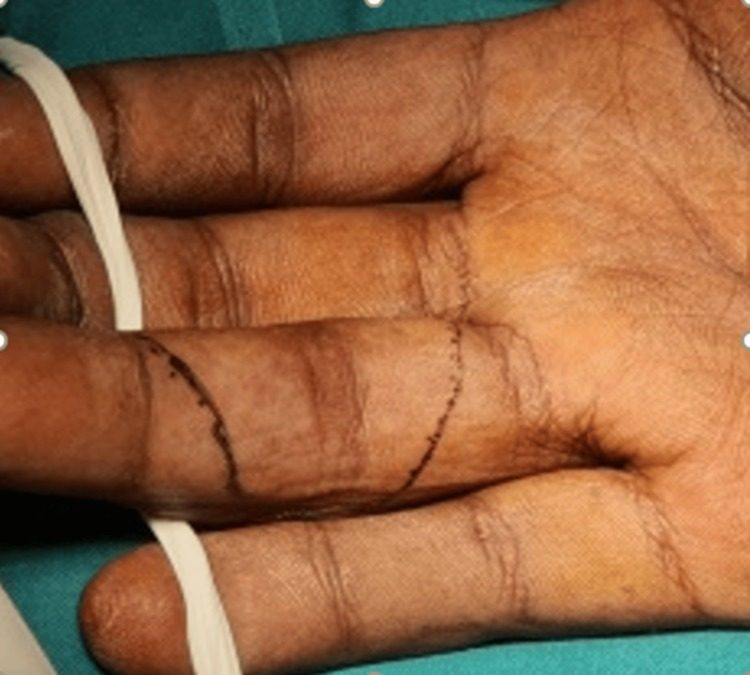
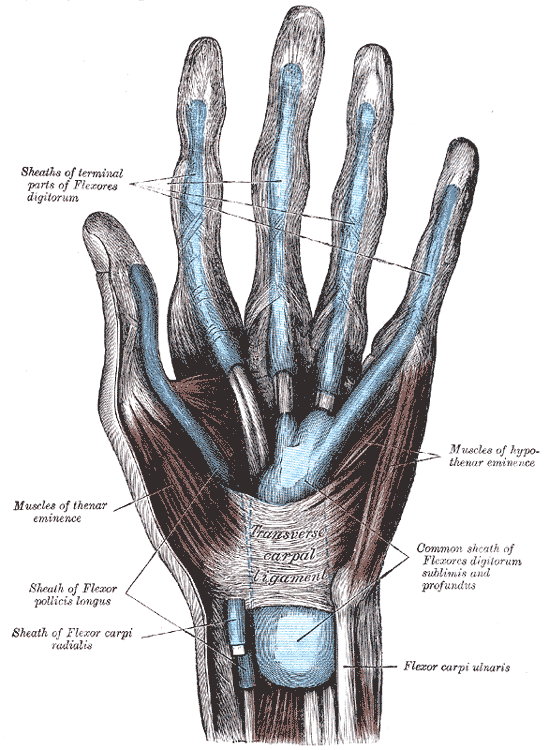
Position
- Supine
- Arm board
- Tourniquet
Landmarks
- Skin creases
- Distal Interphalangeal crease
- Just proximal to DIPJ
- Proximal interphalangeal crease
- Just proximal to PIPJ
- Palmar digital crease
- Well distal to MPJ
- Distal Interphalangeal crease
Incision
- Brunner zig-zag volar digital incision
- 90° to each other
- angled at each skin crease
- not too far dorsal as endangers neurovascular bundle
Internervous Plane
- None
- Area of skin is supplied by nerves on either side of incision
Superficial Dissection
- Reflect skin flaps with underlying fat
- Starting at apex
- Using skin hook & scissors
Dangers
- Digital nerves & vessels
- Especially if skin incision extends too dorsal
- Necrosis of skin flaps
- Especially if cut at an acute angle
- Skin flaps should be thick
- Avoid 90° angles across skin creases, leads to contractures
Reviewed by Professor Phong Tran, Head of Orthopaedic Surgery, Western Health. Last updated 10 October 2026.