
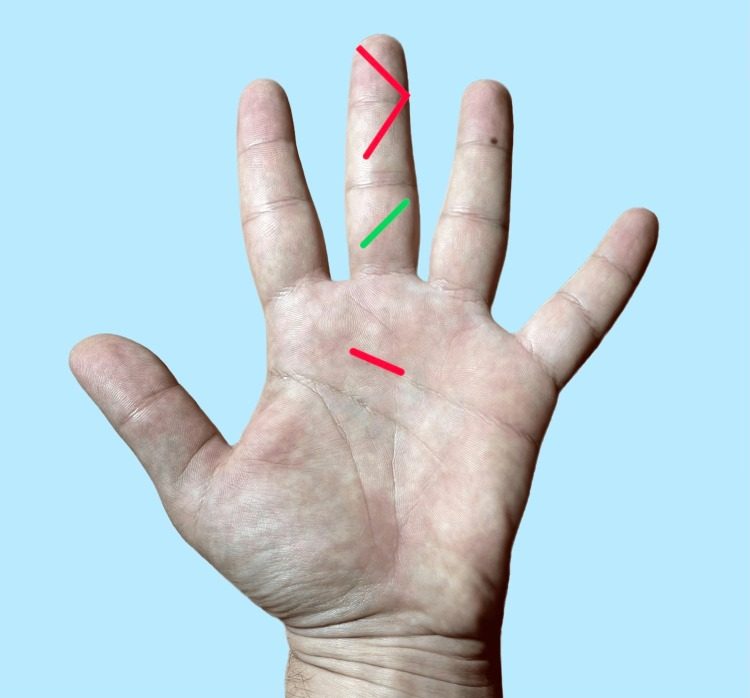
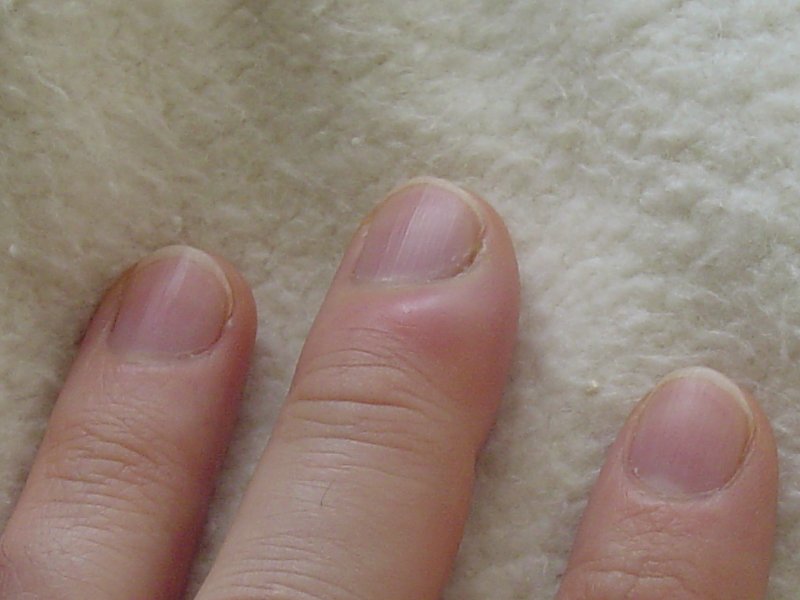
Hand infections such as paronychia, felon, flexor sheath infection and deep space abscesses need prompt drainage through incisions that protect nerves and vessels and avoid crossing flexion creases. Drainage is combined with antibiotics, elevation and early motion.
Aims
- Drain only if pus is present (not just for cellulitis)
- Diagnosis of pus is difficult
- Can’t sleep at night because of pain
- Fluctuance
- Four cardinal signs of Kanavel (for flexor tenosynovitis)
- Pain with passive extension of affected finger
- Fusiform swelling over affected tendon
- Tenderness to palpation of affected tendon
- Affected finger held in slight flexion
- If in doubt, elevate arm with IV AB’s
- If improves, avoid surgery
Principles
- GA
- Tourniquet but no exsanguination
- Leave all wounds open after incision
- Immobilise hand in functional position
- Elevate arm postop
- Mobilise hand once inflammation subsides
- Extensive hand therapy/rehabilitation
Procedure
- Paronychia (nail fold)
- Short longitudinal incision at one or both corners of nail fold
- Felon (pulp space)
- Direct lateral incision on lateral aspect of distal phalanx of finger
- Should be dorsal & distal to distal interphalangeal crease
- Should not extend beyond distal corner of nail
- Avoid ulnar aspect of thumb & radial aspect of index / long finger – may interfere with pinch
- Web space
- Pus points to dorsal aspect but incision must be made on volar aspect
- Curved transverse volar incision following contour of web space about 5mm proximal to it
- Tendon sheath infection
- 2cm transverse incision just proximal to distal palmar crease
- Midlateral incision over distal end of middle phalanx
- Proximally
- Blunt dissection through palmar aponeurosis
- Expose fibrous flexor sheath & A1 pulley
- Incise pulley longitudinally to expose pus
- Perform distal incision so that through-and-through irrigation can be performed
- Medial (ulnar) midpalmar space
- Transverse incision just proximal to distal palmar crease
- Length of incision determined by size of abscess
- Blunt dissection to avoid digital nerves & arteries
- Lateral (radial) Midpalmar space
- 4 cm incision on ulnar side of thenar crease
- Blunt dissection to avoid damage to common digital nerve
- Radial bursa
- 2 incisions
- Small longitudinal incision on lateral side of proximal phalanx of thumb just dorsal to interphalangeal crease
- Along thenar crease to distal crease
- Identify flexor sheath distally
- Incise it to drain pus
- Pass a probe directed proximally
- Feel for probe proximally & cut down onto it longitudinally
- 2 incisions
- Ulnar bursa
- Short lateral incision on ulnar side of little finger
- Dorsal to distal interphalangeal crease
- Incise fibrous flexor sheath
- Drain pus
- Pass probe proximally
- Feel for it proximally
- Incise skin longitudinally over probe
Reviewed by Professor Phong Tran, Head of Orthopaedic Surgery, Western Health. Last updated 10 October 2026.