
Aetiology
- Achondroplasia is autosomal dominant, from gain of function FGFR3 mutation
- Most cases are new mutations, associated with advanced paternal age
- Hypotonia and ligament laxity allow the trunk to collapse into kyphosis when sitting
Clinical Features
- Thoracolumbar kyphosis is common in infancy
- Worsens with unsupported sitting before trunk control develops
- Most curves resolve once the child walks
- Persistent kyphosis develops apical vertebral wedging
- Later lumbar hyperlordosis and spinal stenosis
- Stenosis presents in adolescence or adulthood with claudication, back pain and leg symptoms
Anatomy
- Short pedicles and reduced interpedicular distance narrowing from L1 to L5
- Small foramen magnum risks cervicomedullary compression in infancy
Investigations
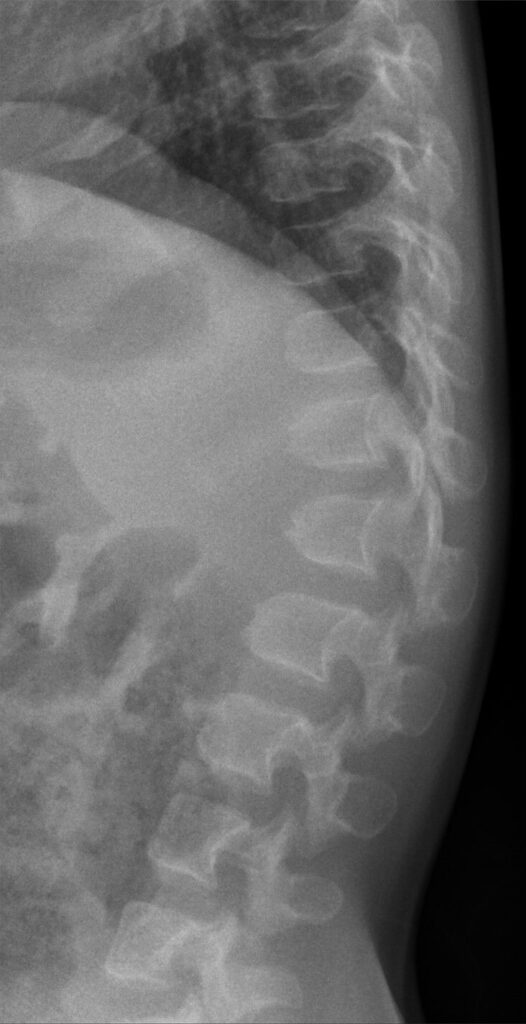
- Lateral standing or sitting spine radiograph to assess kyphosis and wedging
- MRI for stenosis or neurological signs
- Sleep study and craniocervical MRI in infants
Management
- Avoid unsupported sitting and devices that slump the trunk in infancy
- Observation while the child begins walking
- TLSO bracing if kyphosis persists with wedging around age 3
- Anterior and posterior fusion for progressive kyphosis despite bracing
- Fusion also required for neurological compromise from kyphosis
- Laminectomy for symptomatic stenosis across all stenotic levels
Complications
- Post laminectomy kyphosis, so fuse when decompressing over a kyphosis or in children
- Dural tears due to tight canal
- Neurological deficit from progressive kyphosis
- Foramen magnum stenosis causing apnoea or sudden death in infants
- Junctional kyphosis above or below short fusions
Reviewed by Professor Phong Tran, Head of Orthopaedic Surgery, Western Health. Last updated 10 October 2026.