
Indications
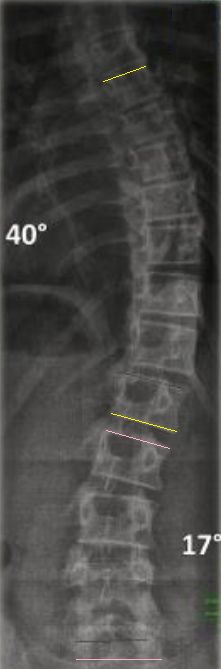
- Adolescent idiopathic scoliosis with Cobb angle 25 to 40 degrees
- Skeletally immature, Risser 0 to 2
- Aim is to stop progression. The curve is not permanently corrected
- Curves of 20 to 25 degrees that show progression of 5 degrees or more
- Bracing is less effective in congenital and neuromuscular curves
Evidence
- BrAIST trial (Weinstein, NEJM 2013) found bracing reduced progression to surgical range
- Treatment success 72% with bracing against 48% with observation
- Benefit rose with hours of wear, aim for 18 hours or more a day
Types
| Brace | Use |
|---|---|
| TLSO (Boston) | Apex at T7 or below. Most used |
| Milwaukee CTLSO | Apex above T7. Rarely used |
| Night time bending brace (Providence, Charleston) | Single lumbar or thoracolumbar curves |
Monitoring
- In brace X-ray to confirm correction
- Standing X-ray every 4 to 6 months out of the brace
- Wean at skeletal maturity, Risser 4 or about 2 years after menarche
- Check skin for pressure areas
- Discuss psychological effects and compliance with the family
Limitations
- Curves over 45 degrees respond poorly and need surgical review
- Poor compliance reduces effect
- In neuromuscular scoliosis bracing helps sitting but does not prevent progression
- Temperature sensors measure compliance
- Curves may progress after brace removal, especially above 40 degrees
- Body image and comfort affect wear time
Reviewed by Professor Phong Tran, Head of Orthopaedic Surgery, Western Health. Last updated 10 October 2026.