
Clinical Features
- Most cases are nonspecific, but a structural cause is more common than in adults
- Red flags are age under 5, night pain, constant pain, fever, weight loss and neurological signs
- Painful scoliosis, stiffness and a list also warrant investigation
- Ask about sport, trauma, bowel and bladder function and family history
- Examine gait, posture, spinal motion, hamstring tightness and neurological function
Differential Diagnosis
| Cause | Features |
|---|---|
| Spondylolysis & Spondylolisthesis | Adolescent athletes with extension related pain |
| Scheuermann kyphosis | Rigid thoracic kyphosis in adolescents. See Kyphosis |
| Paediatric Discitis | Toddlers who refuse to walk or sit |
| Osteoid osteoma and osteoblastoma | Night pain, painful scoliosis, relief with NSAIDs |
| Langerhans cell histiocytosis | Vertebra plana |
| Leukaemia and Ewing sarcoma | Systemic features, bone pain |
| Disc herniation and slipped apophysis | Sciatica, positive straight leg raise |
| Inflammatory arthritis | Morning stiffness, enthesitis, HLA-B27 |
Investigations
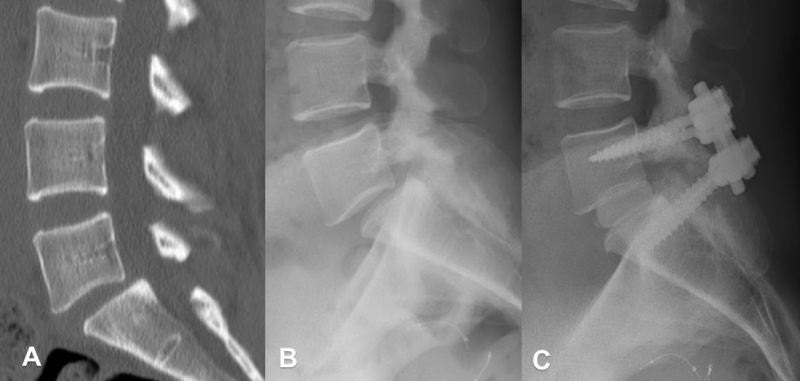
- Standing AP and lateral spine X-ray
- Oblique views or SPECT CT for suspected spondylolysis
- FBC, CRP and ESR if infection or tumour is possible
- MRI for red flags or neurological signs
- Standing PA and lateral spine films
- Bone scan or SPECT CT for occult spondylolysis
- MRI for neurological signs, night pain or suspected infection and tumour
- FBC, ESR and CRP for systemic features
Management
- Treat the specific cause
- Nonspecific pain responds to activity modification, core strengthening and reassurance
- Review persistent pain beyond 4 to 6 weeks
Reviewed by Professor Phong Tran, Head of Orthopaedic Surgery, Western Health. Last updated 10 October 2026.