
Definition
- Rare congenital disorder
- Thrombocytopenia with bilateral absent radius
- Thumbs present
Aetiology
- Autosomal recessive
- 1q21.1 microdeletion including RBM8A on one allele
- Hypomorphic noncoding RBM8A variant on the other allele
Clinical Features
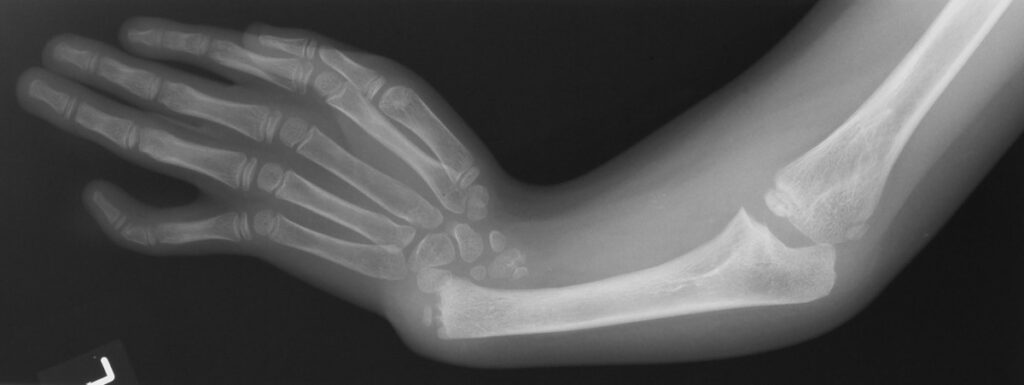
- Bilateral complete absence of the radius in all cases (Bayne and Klug type IV)
- Thumbs present, possibly hypoplastic with weak opposition
- Radially deviated wrist and hand with a short, bowed ulna
- Humeral hypoplasia, phocomelia in severe cases
- Lower limb anomalies common, including knee stiffness, patellar dislocation or absence, hip dysplasia and clubfoot
- Cardiac anomalies (tetralogy of Fallot, ASD), renal anomalies and facial capillary haemangiomas
- Cows’ milk intolerance
Pathology
- Hypomegakaryocytic thrombocytopenia, most severe in the first year
- Intracranial haemorrhage in infancy can be fatal
- Bleeding triggered by cows’ milk intolerance and infection
- Platelet numbers improve after infancy
- Marrow shows reduced megakaryocytes, other lines normal apart from leukaemoid reactions
Differential Diagnosis
- Thumb present with absent radius distinguishes TAR
- Fanconi anaemia, autosomal recessive, thumb hypoplasia, later pancytopenia and positive chromosome breakage
- Holt-Oram syndrome, autosomal dominant, cardiac defects, absent or triphalangeal thumbs
- VACTERL association
- Nonsyndromic radial longitudinal deficiency
Investigations
- Full blood examination and film
- Chromosome breakage testing to exclude Fanconi anaemia
- Genetic testing for 1q21.1 deletion and RBM8A variant
- Echocardiography and renal ultrasound
- Upper and lower limb radiographs
Management
- Multidisciplinary, with platelet transfusion for bleeding and before surgery
- Surgery deferred until platelets improve after the first year
- Stretching and splinting first
- Centralisation or radialisation corrects radial deviation, sometimes after soft tissue distraction
- Many achieve good hand function without surgery, as the thumb is present
- Correction risks recurrence, stiffness and ulnar physeal injury, so surgery is selective
- Knee deformity may need release, osteotomy or guided growth, with variable results
Prognosis
- Mortality highest in infancy from haemorrhage
- Normal intelligence unless intracranial haemorrhage occurred
- Haematological problems improve with age
Reviewed by Professor Phong Tran, Head of Orthopaedic Surgery, Western Health. Last updated 10 October 2026.