
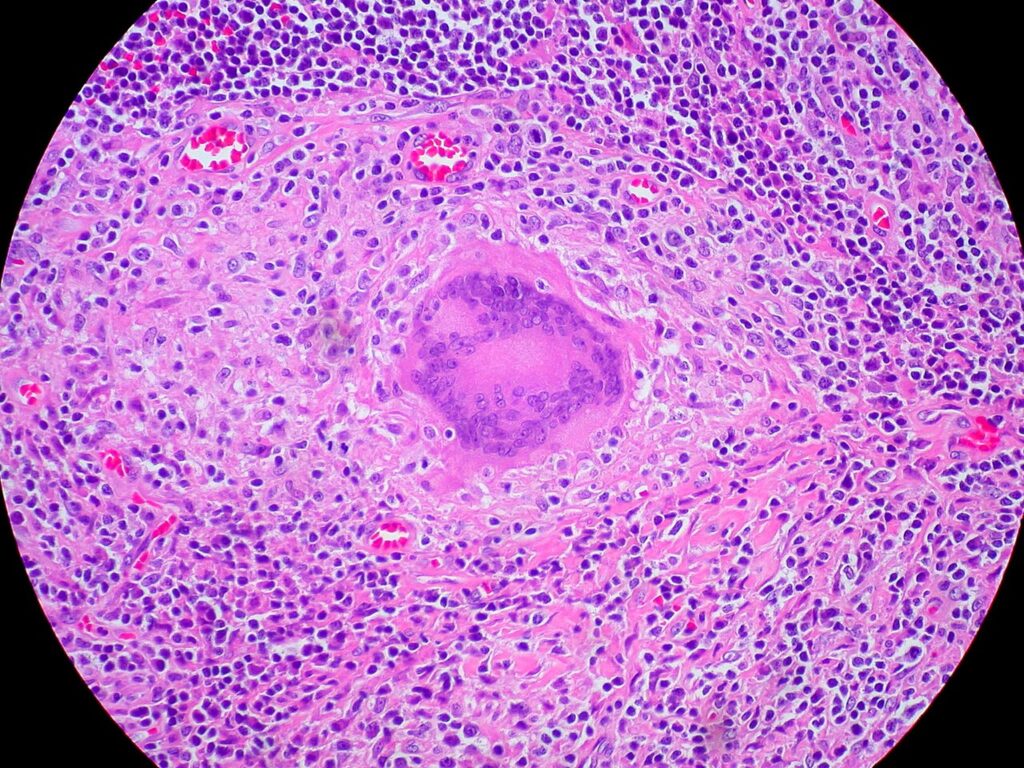
Definition
- Inherited phagocyte defect where granulocytes are unable to kill microbes
Aetiology
- NADPH oxidase defect prevents the respiratory burst
- X linked CYBB mutation in most cases, with autosomal recessive forms
Clinical Features
- Chronic and recurrent infection from early childhood
- Catalase positive organisms such as Staphylococcus aureus, Serratia, Burkholderia, Nocardia and Aspergillus
- Bone infections of hands, feet and spine
- Serratia causes osteomyelitis of small bones of hands and feet
- Aspergillus spreads from lung into ribs and vertebrae
- Abscesses of skin, liver and lymph nodes
- Granulomas obstructing gut and urinary tract
Investigations
- Dihydrorhodamine flow cytometry
- Nitroblue tetrazolium test is the older alternative
- Genetic testing
- Biopsy and culture for fungal and bacterial organisms
- MRI for extent of spinal and multifocal disease
Differential Diagnosis
- Chronic recurrent multifocal osteomyelitis
- Tuberculosis
- Langerhans cell histiocytosis
Management
- Culture before treatment
- Surgical debridement of necrotic bone and abscesses
- Prolonged targeted antibacterial or antifungal therapy
- Prophylactic co-trimoxazole and itraconazole
- Interferon gamma prophylaxis
- HSCT is curative
Complications
- Spinal deformity and cord compression from vertebral osteomyelitis
Reviewed by Professor Phong Tran, Head of Orthopaedic Surgery, Western Health. Last updated 10 October 2026.