
Definition
- Traction apophysitis of the calcaneal apophysis at the Achilles insertion
- Also called calcaneal apophysitis
- The apophysis appears at about 7 years and fuses at around 14 to 16 years
Epidemiology
- Age 8 to 12 years, girls slightly younger than boys
- Most common cause of heel pain in children
- Linked to running and jumping sports and growth spurts
Clinical Features
- Activity related posterior heel pain, often bilateral
- Tenderness on medial and lateral squeeze of the calcaneal tuberosity
- Tight gastrocnemius soleus complex
- Pain is worse after sport and settles with rest
- Limping or toe walking after activity
- No swelling or redness, which would suggest another diagnosis
Investigations
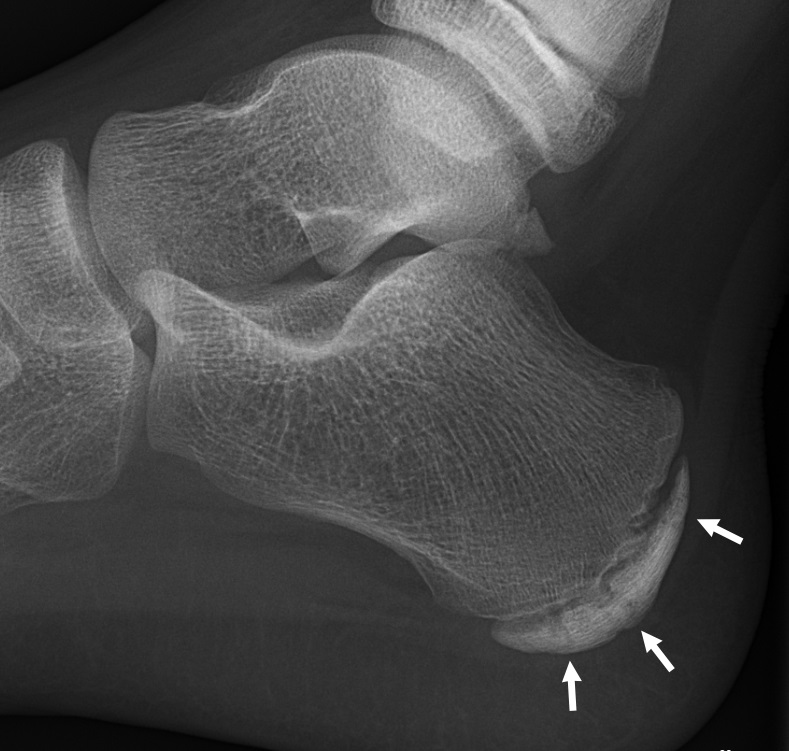
- Diagnosis is clinical
- Sclerosis and fragmentation of the apophysis are normal findings on X-ray
- X-ray if unilateral, night pain or systemic features, to exclude tumour, infection or fracture
Management
- Activity modification, heel raise or cushioned heel cup
- Calf stretching
- Short period of immobilisation for severe pain
- Self limiting, resolving when the apophysis fuses
- Ice and simple analgesia after activity
- Address flat foot or cavus with orthoses if symptomatic
- Return to sport as pain allows
- Explain the benign natural history to the family
Differential Diagnosis
- Calcaneal stress fracture
- Achilles tendinopathy or retrocalcaneal bursitis
- Osteomyelitis or bone tumour such as a unicameral bone cyst
- Tarsal coalition and inflammatory arthritis
Reviewed by Professor Phong Tran, Head of Orthopaedic Surgery, Western Health. Last updated 10 October 2026.